

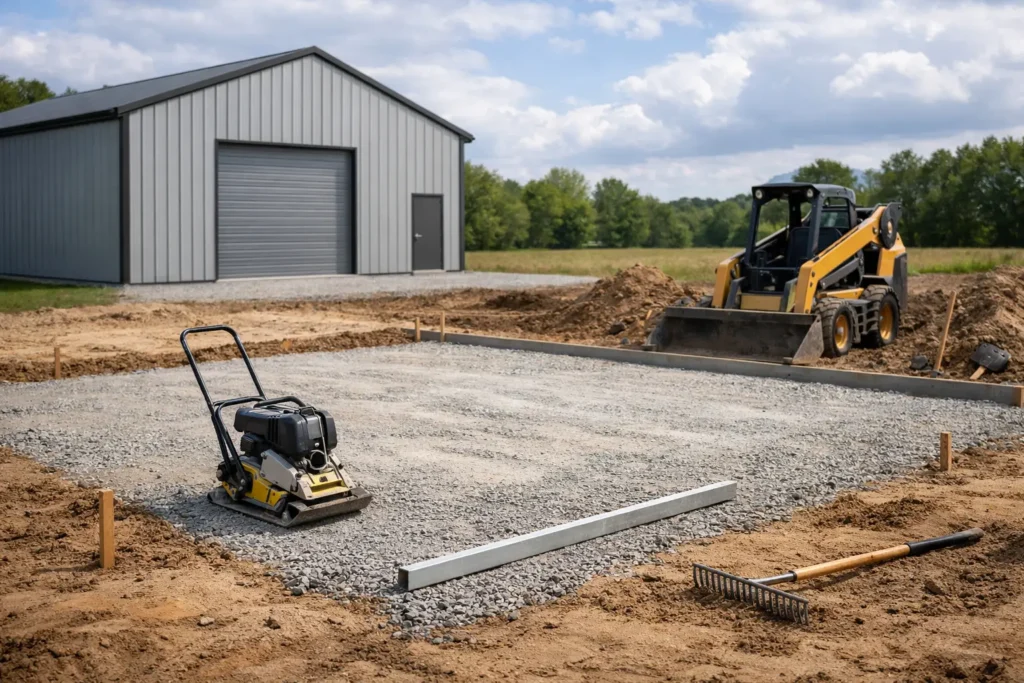
A steel garage can be manufactured to the inch, but if the ground is wrong, the whole project starts behind schedule. A good steel garage site preparation guide is really about preventing expensive fixes later – drainage problems, slab issues, installation delays, and permit headaches that could have been handled before your building ever ships.
For most property owners, site prep is where the real decision-making happens. You are not just picking a spot that looks convenient. You are choosing how water will move, how crews will access the site, whether your concrete will perform, and how smoothly your installation day goes. Get this part right, and the rest of the process feels a lot simpler.
Why site prep matters before your steel garage arrives
Steel garages are engineered systems. That means the frame, panels, anchors, and openings are designed around specific dimensions and load requirements. If the site is out of level, too soft, poorly drained, or not ready for anchoring, even a well-built structure can become a frustrating install.
The most common problems usually start small. A low area holds water after rain. A slab is poured before final building dimensions are confirmed. Trees or fences leave too little clearance for delivery and framing crews. None of these issues are unusual, but they can cost time and money if they are discovered late.
That is why experienced buyers treat site preparation as part of the building itself, not a separate chore. The garage only performs as well as the surface under it.
Choosing the best location for your garage
The best site is not always the closest flat area on your land. It should make sense for access, drainage, use, and local requirements. If you are storing vehicles, trailers, equipment, or setting up a workshop, think about how you will actually move in and out of the space every week.
A location near an existing driveway can reduce grading and make delivery easier, but only if the traffic path stays firm in wet weather. A back corner of the property may offer more room, but if installers cannot get materials there safely, the savings disappear fast.
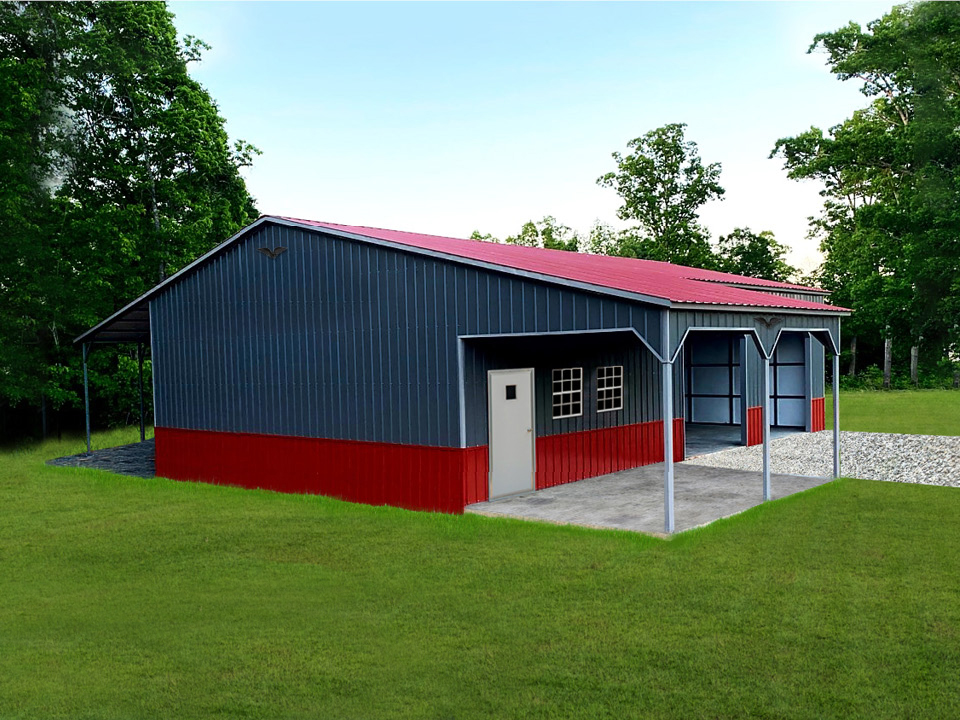
It also helps to think beyond the building footprint. Your garage needs working room around it for construction, future maintenance, and day-to-day use. Doors need clear swing or travel space. Vehicles need enough turning radius. If you may add a lean-to, extra bay, or utility connection later, plan for that now instead of boxing yourself in.
Check setbacks, easements, and utility lines first
Before you spend money on grading or concrete, confirm local setbacks, zoning rules, and any easements on the property. Rural landowners sometimes assume they have complete freedom to build, but county and municipal rules can still affect placement, height, or distance from property lines.
Underground utilities matter too. Call for utility locating before any excavation begins. It is a simple step that protects both your project and your budget.
Grading and leveling in a steel garage site preparation guide
If there is one part of a steel garage site preparation guide that should never be rushed, it is grading. Your building site should be level, compact, and high enough to shed water away from the structure.
Many buyers focus on level and forget elevation. A perfectly level pad in a low, wet area can still create standing water around the perimeter. That moisture can affect your slab, your anchors, and the usable area around the garage. In practical terms, the site should usually sit above the surrounding grade so rainwater moves away naturally instead of collecting near the walls.
Compaction matters just as much. Fill dirt that has not been properly compacted can settle over time, leading to uneven support or cracked concrete. If your site needs significant fill, that is usually a sign to bring in a qualified site prep or concrete contractor rather than guessing your way through it.
For some properties, minor grading is enough. For others, especially sloped or soft sites, more extensive earthwork may be needed. That is one of those it-depends moments that should be evaluated early, because major grade changes can affect cost, drainage design, and permitting.
Drainage is not optional
Water is one of the biggest long-term threats to any garage site. A steel structure is durable, but constant pooling around the base creates problems you do not want – muddy access, erosion, slab edge wear, and moisture issues around stored equipment or vehicles.
Good drainage usually starts with the pad elevation and surrounding slope. The finished grade should direct water away from the building on all sides. On some sites, that is enough. On others, you may need swales, gravel, culverts, or other drainage improvements to handle runoff correctly.
If your property already has drainage trouble after storms, do not assume the garage will somehow solve it. A new roof concentrates water in a predictable way, and that can make a weak drainage plan more obvious. It is better to address water flow before installation than after your building is in place.
Concrete slab or ground mount – know what your building needs
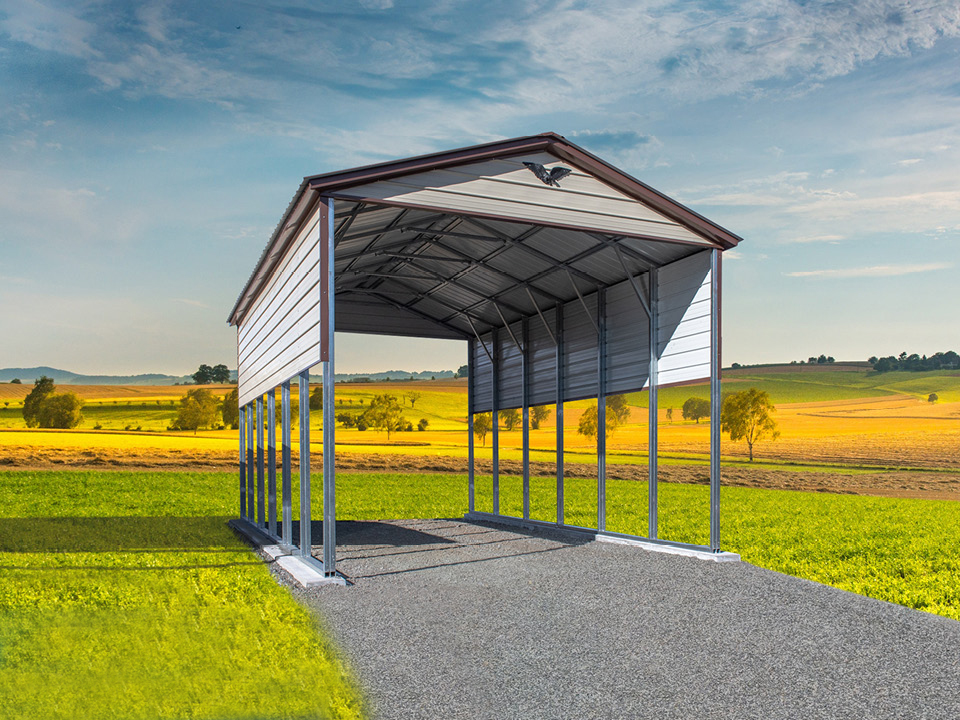
Not every steel garage installs the same way. Some are anchored to a concrete slab, while others may be installed on ground anchors or alternative foundations depending on local conditions, building type, and code requirements. The right option depends on your intended use and your site.
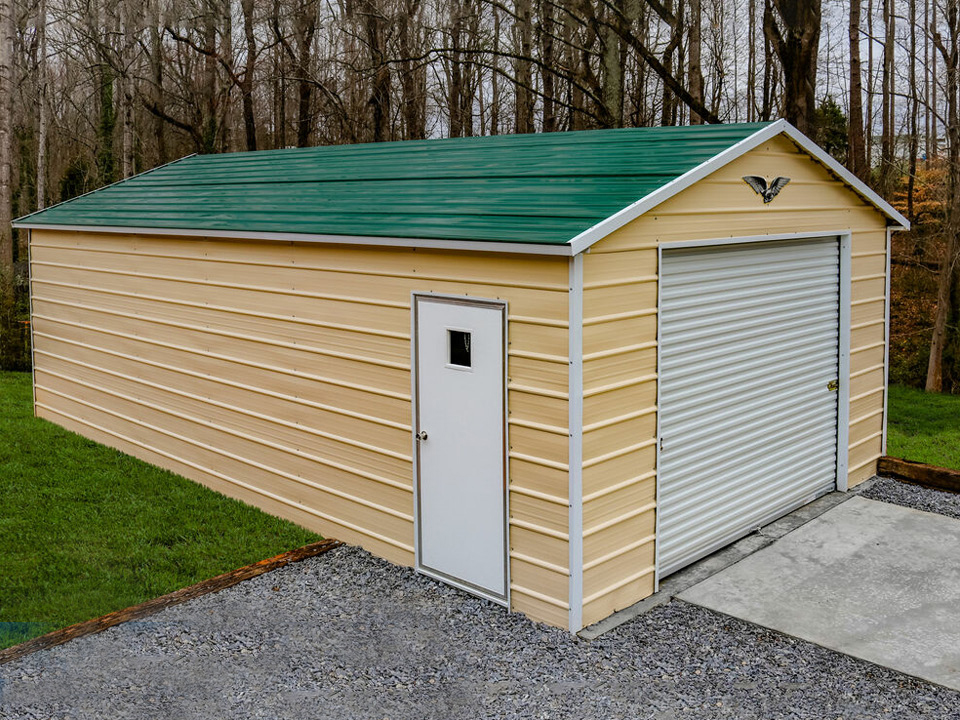
If you want a fully enclosed garage for vehicles, storage, or workshop use, a concrete slab is often the preferred foundation because it gives you a durable floor and a stable anchor surface. But timing is critical. Do not pour concrete until final building dimensions, anchor plans, and any local code requirements are confirmed.
A slab that is even slightly off can create serious headaches on install day. Too small, and the building may not fit as intended. Too large, and you may have exposed edges that affect appearance or water runoff. Thickness, reinforcement, and finish also depend on use. A garage for passenger vehicles is different from one storing tractors, RVs, or heavy equipment.
Work from approved specs, not rough estimates
This is where expert coordination pays off. If your garage is custom-built, your slab should match the final approved plans, not a verbal estimate or an early sketch. Essex Metal Buildings works with buyers through sizing and configuration decisions first, which helps reduce the kind of miscommunication that can lead to slab errors.
Access for delivery and installation crews
A beautiful site on paper can still fail if a truck and installation crew cannot reach it. Delivery access should be part of site prep from the beginning.
Think about gate width, driveway clearance, overhead branches, fence lines, soft ground, and turning space. Large building components need a safe path from the road to the install area. If the route includes steep grades, low limbs, tight turns, or muddy sections, those obstacles should be corrected in advance.
This is especially important on rural properties where the build site may be well behind the home or barn area. The more remote the location, the more carefully access should be planned.
Permits and local code requirements
Permitting is one of the most overlooked parts of preparing for a steel garage. Buyers often focus on design and price first, then discover that local approvals affect size, foundation type, engineer drawings, wind or snow loads, and placement.
Start with your local building department before construction begins. Ask what permits are required, whether engineered plans are needed, and what site-specific standards apply. In some areas, the site itself may need inspection before concrete is poured or before the structure is installed.
This is another area where early planning prevents delays. If your building is ready but your permit is not, your timeline can slip fast.
Final checks before installation day
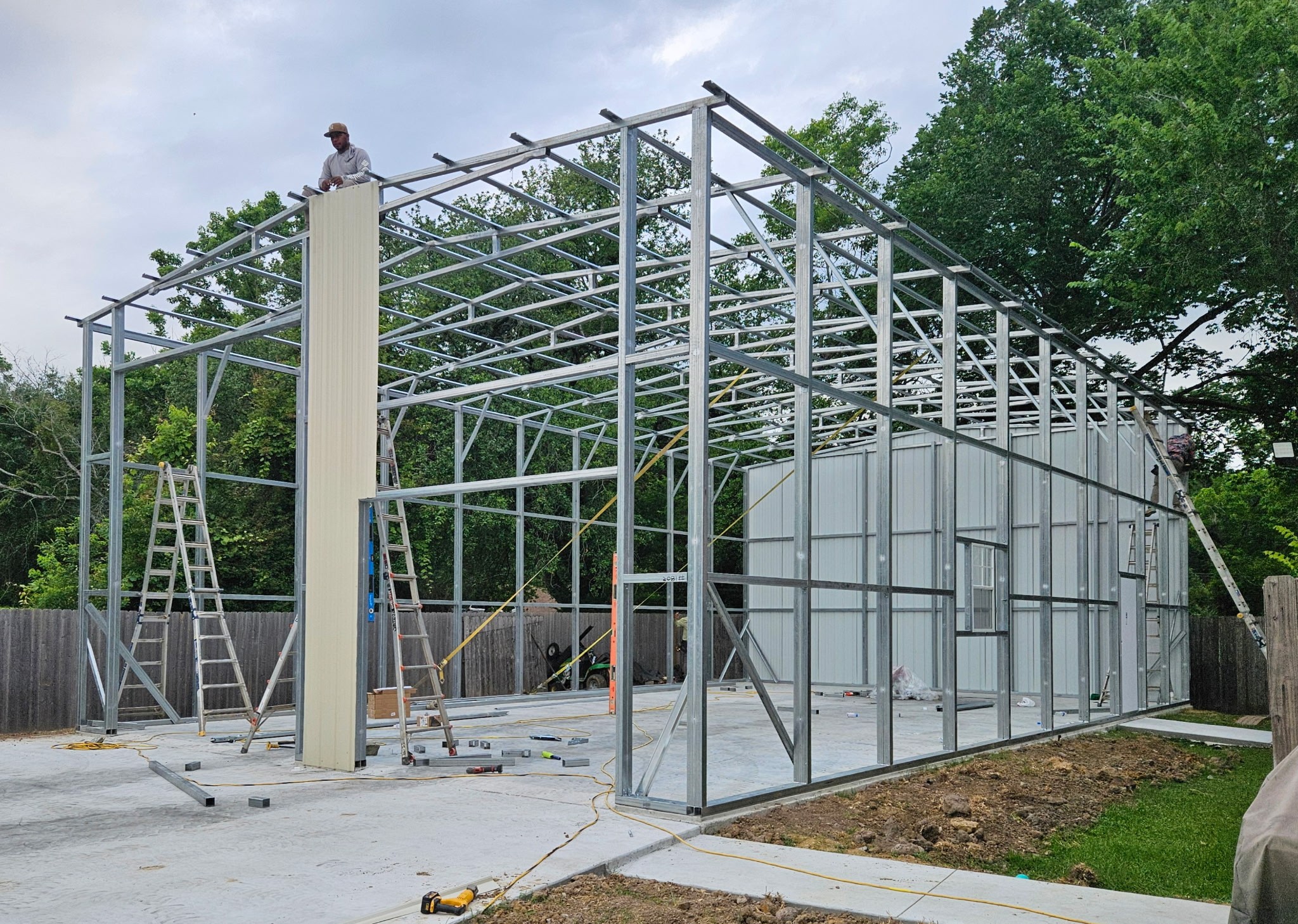
As installation approaches, the site should be fully cleared and ready to work. That means vegetation removed, grade completed, drainage handled, foundation prepared if required, and access open for crews and materials.
It is also smart to walk the site one more time with real use in mind. Can you back a truck to the garage easily? Will water move away from door openings? Is there enough clearance around the structure for future service or upgrades? Small adjustments at this stage are much easier than reworking things once the garage is standing.
A strong site prep plan does not have to be complicated, but it does need to be deliberate. The buyers who have the smoothest installs are usually the ones who ask practical questions early, confirm specs before concrete, and treat grading and drainage as non-negotiable parts of the project.
If you are planning a custom steel garage, take the time to prepare the site with the same care you give the building design. That is what helps your garage look right, perform right, and stay useful for years after installation day.