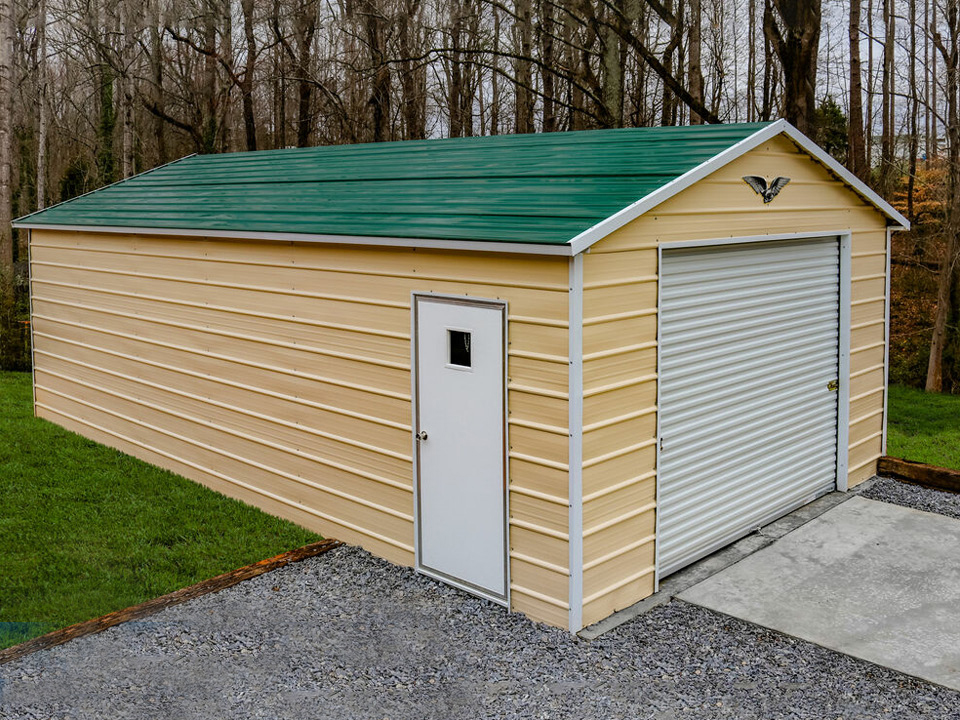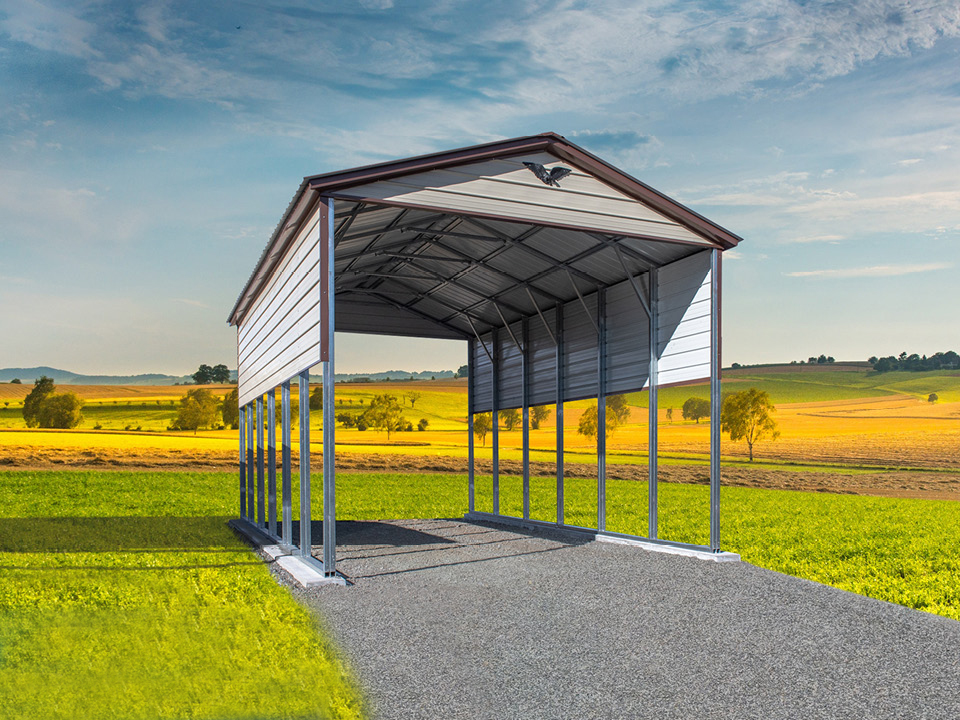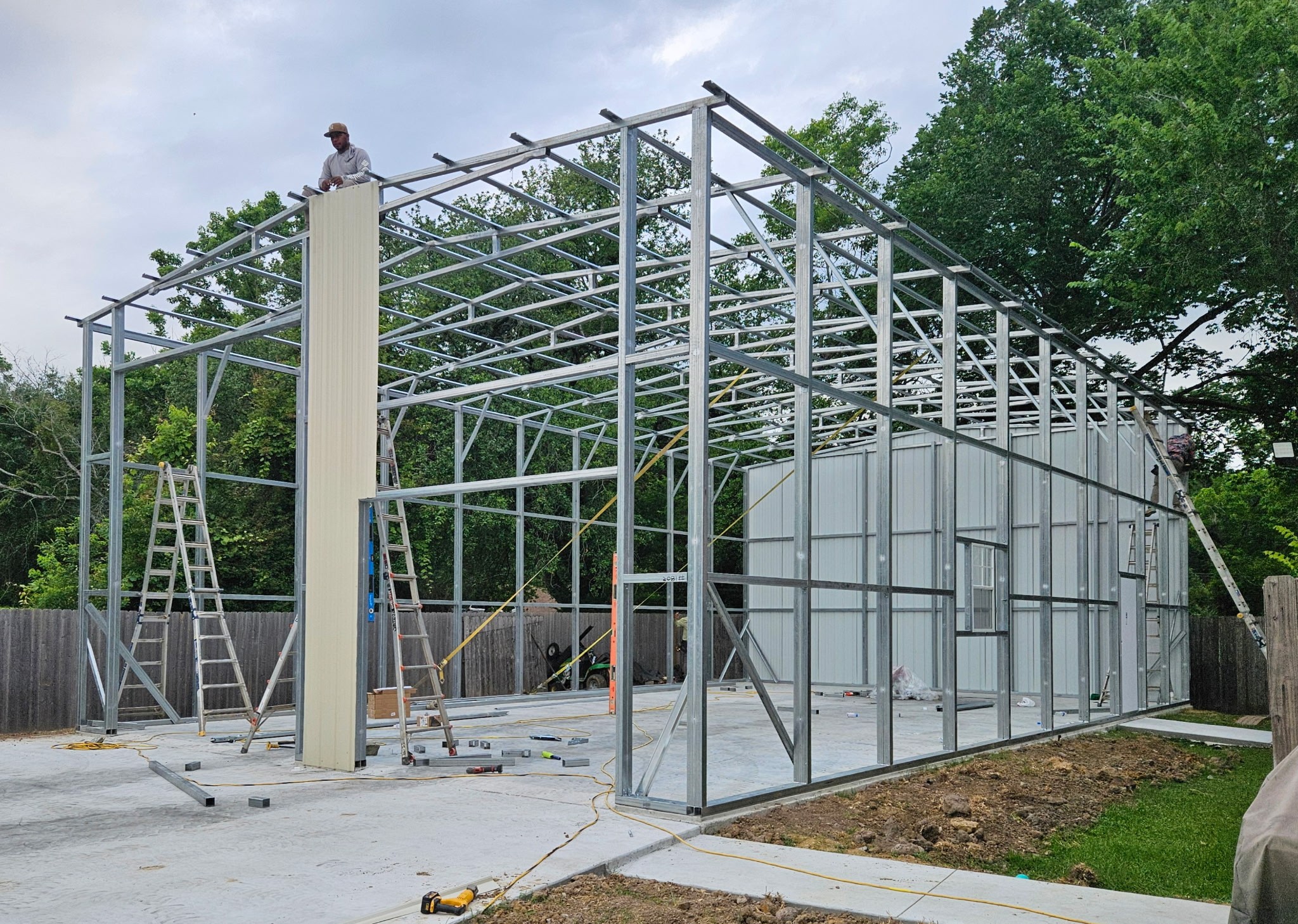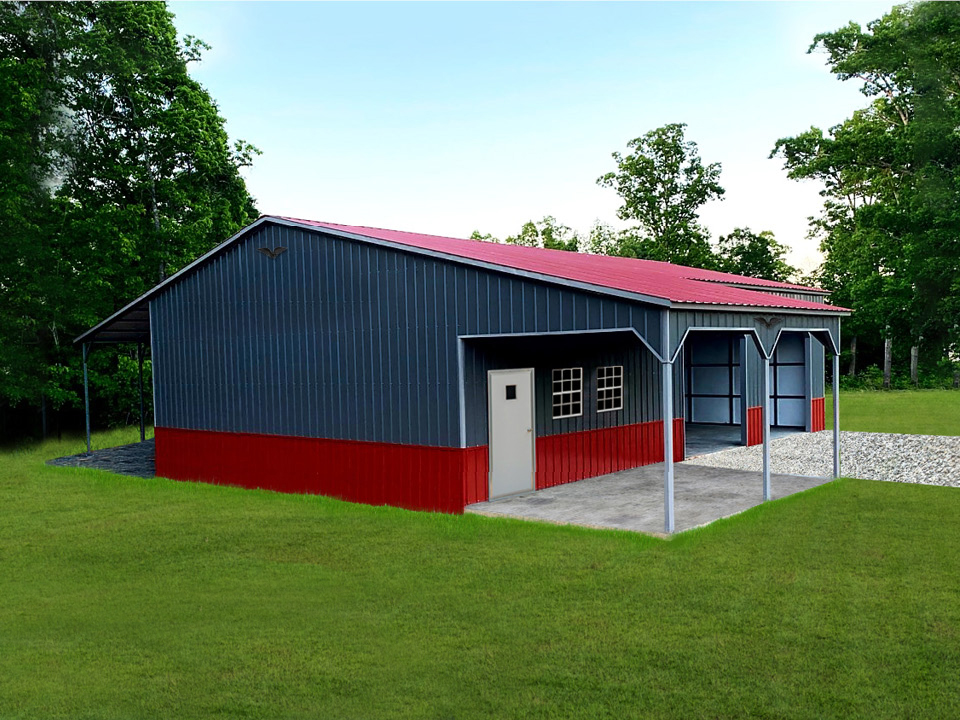


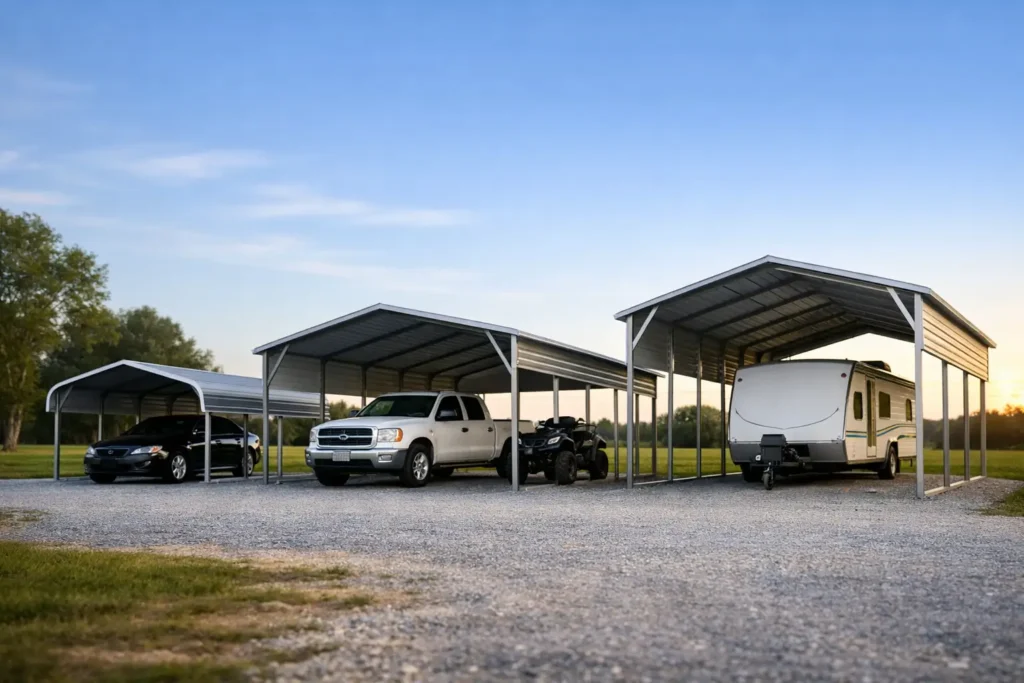
A carport that looks big enough on paper can feel tight the first time you pull in a truck, open the doors, and try to walk around it. That is usually when buyers start asking the real question: what size metal carport do I actually need? The right answer depends on more than vehicle count. Width, height, length, roof style, and how you plan to use the space all matter.
If you choose too small, daily use becomes frustrating fast. If you go too large, you may spend more than necessary or run into site and permitting limits. A good fit protects your vehicles, works with your property, and leaves enough room to use the structure comfortably.
What size metal carport works for your situation?
The easiest place to start is with the vehicles or equipment you need to cover. A single sedan needs far less room than a full-size pickup with tow mirrors. A compact SUV and a side-by-side may fit under one layout, while a dually truck, boat, or camper may need extra width and much more height.
For one standard vehicle, many buyers look at a carport around 12 feet wide. That can work well for a car or smaller SUV, especially if your goal is simple overhead protection. If you want more breathing room for opening doors or stepping out without hugging a post, going wider often makes daily use easier.
For two vehicles, 18 to 24 feet wide is a common range. The narrower end may cover two smaller vehicles, but it can feel tight if both are driven often. A 20-foot-wide carport is a popular middle ground, while 22 to 24 feet gives better clearance for full-size trucks, wider SUVs, and easier parking.
For three vehicles, many buyers move into 26 to 30 feet of width or more. At that point, layout matters just as much as raw dimensions. If the structure will serve as a flexible family parking area, extra width usually pays off.
Width matters more than most buyers expect
When people think about sizing, they often focus on whether the roof covers the vehicle footprint. That is only part of the picture. You also need side clearance for mirrors, door swing, walking space, and the posts that support the structure.
A car may technically fit under a narrow carport, but that does not mean it will be convenient. If you have kids getting in and out, need to load tools, or want to keep a mower, motorcycle, or trash cans under the same roof, a few extra feet can make a big difference.
This is where trade-offs show up. A tighter structure costs less and takes up less room on the site. A wider one is easier to use and more forgiving if your vehicle lineup changes later. If your budget allows it, sizing for comfort instead of bare minimum is usually the better long-term move.
Common width guidelines
A practical starting point is 12 feet wide for one vehicle, 18 to 24 feet for two, and 26 to 30 feet for three. Those numbers are not rules. They are planning ranges. If you drive larger vehicles, want storage along one side, or simply do not want a tight fit, go up from there.
Height is where expensive mistakes happen
Width gets attention, but height is the dimension that causes the most trouble. Buyers often measure vehicle height and stop there. In reality, you also need to account for roof framing, clearance at entry points, accessories like roof racks, and any future vehicle changes.
A standard passenger car usually does fine under a lower-profile structure. Pickups, lifted trucks, work vans, enclosed trailers, and RVs are another story. If you are covering anything taller than a typical SUV, careful measuring is worth your time.
For many standard cars, SUVs, and light trucks, a carport with 7 to 9 feet of clearance may be enough. For taller trucks or utility vehicles, 10 to 12 feet may be more appropriate. RVs and campers often require 12 feet or more, and some need significantly higher side legs depending on rooftop equipment.
Do not forget that stated building height and actual usable clearance are not always the same thing. Roof style affects the interior feel and usable height. That is one reason vertical roof designs are often preferred for taller structures and areas that see more snow or heavy rain.
Length should match more than bumper-to-bumper dimensions
Length seems simple, but it deserves more thought than many buyers give it. A carport that matches the exact length of your vehicle may still leave part of it exposed during blowing rain or seasonal weather. It can also leave no room for a front toolbox, hitch, or small storage area.
For standard cars and small SUVs, 20 to 21 feet of length often works well. Full-size trucks may need 22 to 26 feet depending on cab size and bed length. Boats, trailers, and RVs can require much more.
If your vehicle fits with only inches to spare, that usually means the structure is undersized. A little extra length improves coverage and makes parking less stressful. It also gives you more flexibility if you switch vehicles later.
Think about use, not just fit
A metal carport can do more than keep sun, rain, and hail off a vehicle. Many property owners want the covered area to double as a workspace, equipment shelter, or staging area. That changes the size conversation.
If you plan to store feed, tools, seasonal items, or outdoor equipment under the same roof, a carport sized only for vehicle dimensions may fall short. The same applies if you want to back in a trailer, open a truck bed, or walk around the sides comfortably.
This is why the best sizing decision usually starts with one question: how do you want the space to function on a normal day? If the answer includes more than parking, build that into the dimensions now instead of trying to work around a too-small structure later.
Site limits can shape what size metal carport you can build
Even if you know what size metal carport you want, your site may narrow the options. Property lines, drive approach, slope, trees, utility access, and local requirements all affect what will actually work.
A wide carport is not useful if you cannot approach it comfortably with your vehicle. A tall RV cover may need more planning if nearby branches, overhead lines, or local restrictions are involved. Ground conditions also matter because the installation surface and anchoring method should match the building and the site.
This is where custom planning helps. A structure should fit the property as well as the vehicle. Buyers often come in thinking only about standard sizes, then realize a few changes to orientation or dimensions make the whole setup work better.
Standard sizes vs. custom sizing
Standard sizes are popular because they are familiar, cost-effective, and easy to compare. If your needs are straightforward, a common single-, double-, or triple-wide layout may be exactly right.
But not every property owner has standard needs. Maybe you need to cover a lifted truck and a side-by-side. Maybe you want one bay for parking and one for equipment. Maybe you need extra height on one end, partial enclosure, or room to grow into later.
That is where custom sizing makes sense. Paying for the right dimensions up front is often more cost-effective than buying a structure that almost works and then outgrowing it. Essex Metal Buildings helps buyers sort through those details so the final size fits both the use case and the property.
A simple way to choose the right size
Start with your largest vehicle, not your smallest. Measure width with mirrors, height with accessories, and total length including hitches or front-mounted equipment. Then add clearance for entering, exiting, and moving around the structure.
Next, think one step ahead. Will you replace a sedan with a truck in two years? Add an ATV, mower, or trailer? Want side panels or enclosed sections later? If the answer might be yes, sizing up modestly now usually makes more sense than replacing the whole structure later.
Finally, match the building to the way you actually live and work. A carport should be easy to use every day, not just technically large enough to check a box.
The best size metal carport is the one that protects your vehicles, fits your site, and still feels practical six months from now. If you are debating between barely enough and comfortably right, comfortably right is usually the better investment.