

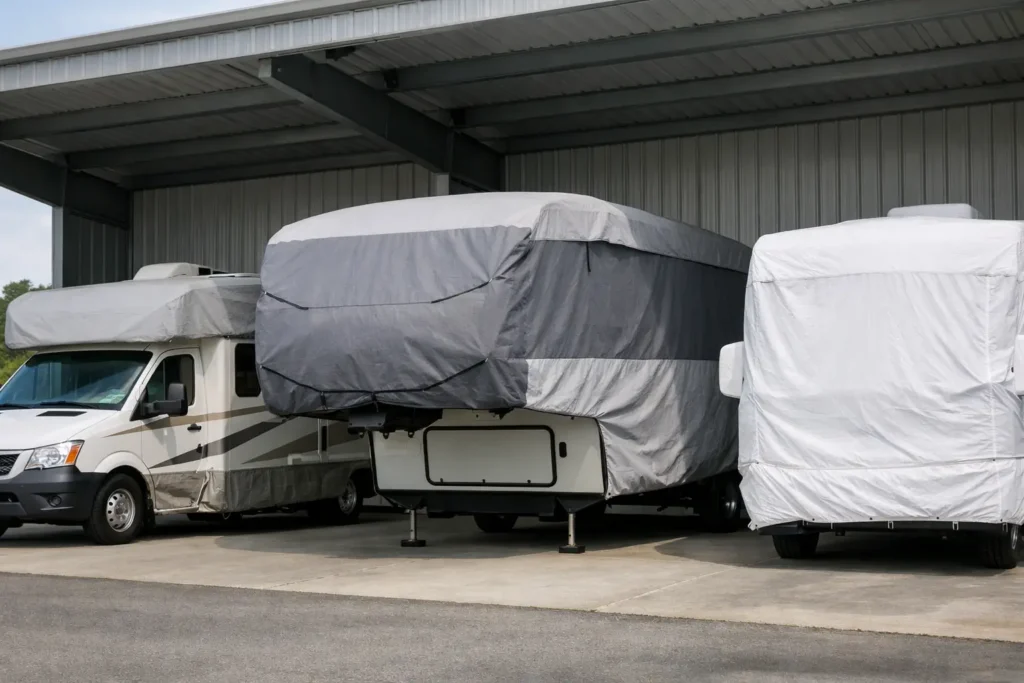
An RV cover that looks right on paper can feel frustratingly tight the first time you pull in with mirrors extended, try to open the entry door, or back in after dark. So, how wide should RV covers be? Start with your RV’s widest point, then add enough working clearance for parking, access, and the way you actually use your property.
For most RV owners, a 14-foot-wide metal RV cover is a practical starting point. A 12-foot width may work for a smaller camper or trailer when space is limited, while 16 feet or more provides easier parking and better access around larger motorhomes, fifth wheels, and wide slide-out models. The right answer depends on more than the RV body width.
How Wide Should RV Covers Be? Start With Real Measurements
Do not order based only on the model name or the advertised width of your camper. Many RVs have an 8- to 8.5-foot body, but mirrors, awnings, ladders, roof-mounted accessories, and slide-out hardware can extend beyond that measurement.
Measure the widest point of your RV with mirrors in their normal parked position. Then consider whether you want enough side room to walk through comfortably, wash the unit, connect power, or open doors without pulling the RV back out. The structure should protect your investment without turning every parking job into a precision exercise.
A useful rule is to allow at least 2 feet of clearance on each side of the widest part of the RV. That means an RV measuring 8.5 feet wide with mirrors may fit under a 12-foot cover, but it will be close. A 14-foot-wide cover gives most owners a more comfortable margin. If you expect to park a wider RV later, use the cover for equipment, or want room for maintenance, sizing up to 16 feet often makes sense.
Common RV Cover Widths and What They Fit
There is no single standard that fits every setup, but these width ranges are a reliable place to begin when planning a custom metal structure.
12-foot-wide RV covers
A 12-foot-wide cover can work for compact travel trailers, pop-up campers, truck campers, and narrower Class B vans. It may also protect a standard-width travel trailer if your site is level, the approach is straight, and you only need basic weather coverage.
The trade-off is limited side clearance. Mirrors may need to be folded in, doors can be harder to access, and backing in leaves little room for error. If the cover will sit between fences, trees, or other buildings, remember that the roof width is only part of the equation. You also need a clear approach to get the RV between the posts.
14-foot-wide RV covers
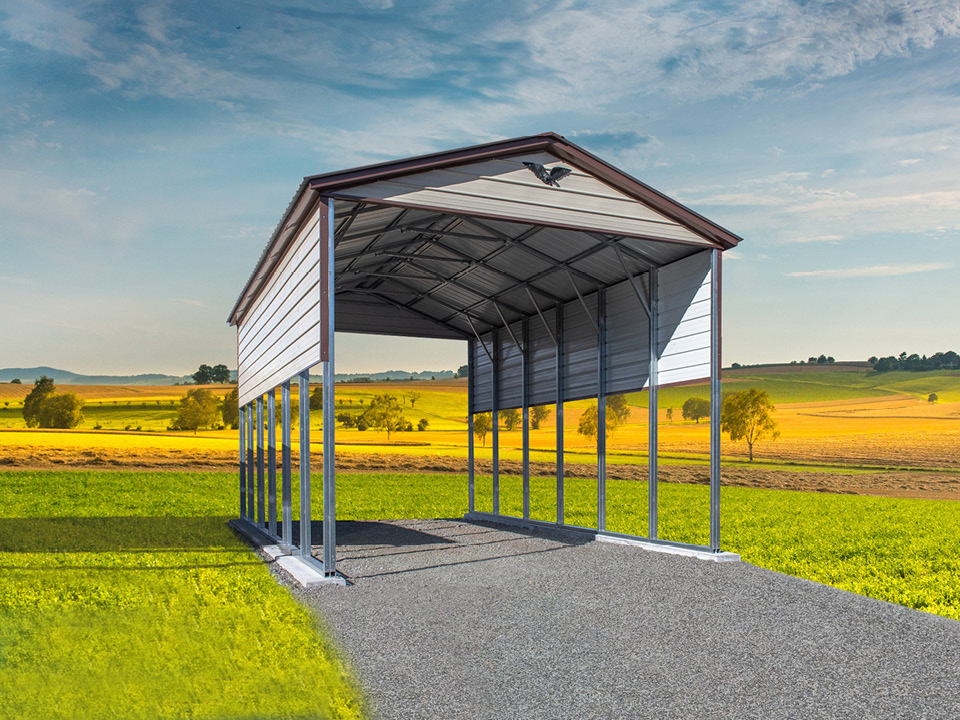
For many homeowners, a 14-foot width is the sweet spot. It generally provides reasonable clearance for most travel trailers, fifth wheels, Class A motorhomes, and Class C motorhomes without taking up more land than necessary.
This width makes everyday use easier. You have more room to line up the RV, walk beside it, inspect tires, and access storage compartments. It also gives you flexibility if a future camper is slightly wider or has larger mirrors. If you are unsure whether to choose 12 or 14 feet, 14 feet is usually the safer long-term choice.
16-foot-wide RV covers
A 16-foot-wide cover is a strong option for large motorhomes, wide fifth wheels, RVs with frequent slide-out use, or owners who want generous working space. It is also ideal when the covered area will serve more than one purpose, such as storing a utility trailer, golf cart, lawn equipment, or seasonal supplies beside the RV.
The additional width adds cost and requires more site space, but it can eliminate daily frustrations. A wider cover also allows for a more forgiving parking path when the drive is curved or the RV must be backed in at an angle.
Widths over 16 feet
Covers that are 18, 20, or even wider are useful for shared storage and larger properties. You may want this size to shelter two vehicles side by side, combine RV storage with an outdoor work area, or protect a motorhome plus a tow vehicle.
At this point, you are planning more than a simple parking cover. Think about roof style, side panels, enclosed storage, drainage, and how the building will fit with your driveway and property layout. A custom configuration can prevent you from paying for space that does not improve the way you use it.
Allow Room for Doors, Slides, and Daily Access
The RV itself is not the only thing that needs to fit. Before settling on a width, picture a normal weekend at home. Can you open the main entry door? Reach the storage bays? Hook up shore power? Walk along the passenger side with a cover in place?
If you intend to extend slide-outs while the RV is parked, measure their full extension. A 14-foot-wide cover may be adequate for parking, but it may not provide enough room to extend a slide and move around it comfortably. In that case, a 16-foot or wider building is usually more practical.
Side panels change the calculation, too. An open-sided RV cover gives you more usable access around the unit. Adding one or more enclosed sides increases protection from sun, wind, and blowing rain, but posts and panels create a firmer boundary. Make sure your planned clear space reflects the final design, not just the roof dimensions.
Check the Post Spacing and Clear Opening
When buyers ask about width, they often focus on the overall roof measurement. That matters, but the usable opening between the support legs matters just as much. The RV must pass comfortably between those posts, especially at the entry point.
Ask for the clear width where you will drive in and park. If your driveway approach is narrow or angled, extra width is valuable because it gives you room to correct while backing in. This is especially helpful for longer fifth wheels and motorhomes that do not turn as sharply as a smaller trailer.
Also consider where gutters, downspouts, concrete edges, landscaping, and utility connections will sit. A cover can be technically wide enough and still feel cramped if exterior features reduce the usable space around it.
Plan for Your Site, Not Just Your Current RV
A well-sized RV cover should fit the property as well as the vehicle. Measure the available pad, driveway, turning area, and setbacks before you order. If your RV enters from the side rather than straight ahead, you may need more open space at the entrance than the final parking width suggests.
Local permitting and wind or snow requirements can also affect the final design. Depending on your location, the building may need specific anchoring, frame strength, roof options, or setbacks. These details are not reasons to settle for a poor fit. They are reasons to plan the building correctly from the start.
Future use is another smart reason to add width. If you might trade up to a larger RV, purchase a boat, add a side-by-side, or want a covered work area, a little extra room now can be less expensive than replacing a too-small structure later.
Width Is Only One Part of a Proper RV Cover
A cover can be wide enough and still fail to protect your RV if the length and height are undersized. Measure total RV length, including a rear ladder, spare tire carrier, or hitch if it will remain attached. For height, account for air conditioners, antennas, satellite equipment, and the roof pitch or truss clearance of the building.
Roof style is worth considering as well. A vertical roof is often a practical choice for larger RV covers because the panels run from ridge to eave, helping rain, leaves, and snow move off the roof more efficiently. It may cost more than other roof orientations, but the long-term maintenance benefit can be worthwhile in areas with heavy weather.
The best setup balances coverage, access, budget, and your site conditions. Do not settle for the narrowest cover that can physically hold the RV. Choose a width that lets you park with confidence and use the space without feeling boxed in.
Before you build, measure your RV at its widest point, mark the proposed post locations on the ground, and walk the space as if the vehicle were already there. If you want help turning those measurements into a practical layout, Essex Metal Buildings can help you configure a made-to-order RV cover that protects the rig you own now and leaves room for what comes next.