A metal garage can look finished from the outside and still feel miserable inside once the weather shifts. If your garage turns into an oven in summer, drips with condensation in winter, or stays too loud to work in comfortably, your metal garage insulation options deserve a closer look.
Insulation is not just about making the space warmer. In a steel building, it also helps control moisture, reduce temperature swings, soften noise, and make the garage more usable year-round. The right choice depends on how you plan to use the building, your budget, and whether you are insulating a new garage or upgrading one that is already installed.
Why insulation matters in a metal garage
Steel is durable, low maintenance, and built to last, but it transfers heat fast. That means outdoor temperatures can affect the interior more dramatically than many owners expect. On a hot afternoon, an uninsulated metal garage can heat up quickly. On a cold morning, the inside can feel almost as cold as the outside air.
Moisture is the other major issue. Warm air meeting cool metal panels can create condensation, especially on the roof. That can lead to dripping, damp tools, rust concerns, and a generally uncomfortable space. If you use your garage for equipment storage, hobbies, vehicle protection, or light workshop use, insulation can make a real difference in how well the building performs.
The main metal garage insulation options
There is no single best answer for every building. The best insulation for a small vehicle garage may not be the best fit for a workshop, farm storage building, or garage with finished interior walls.
Fiberglass insulation
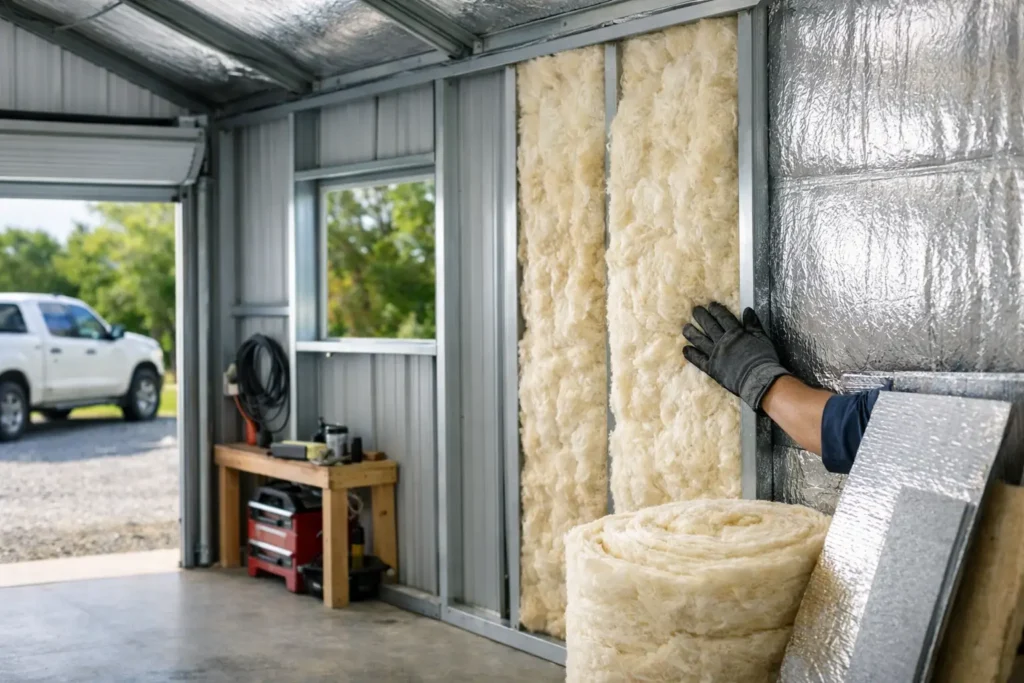
Fiberglass is one of the most common metal garage insulation options because it is familiar, widely available, and relatively cost-effective. It usually comes in rolls or blanket systems and can be installed between framing members. In metal buildings, it is often paired with a facing that acts as a vapor retarder.
For many owners, fiberglass hits the middle ground. It can improve temperature control and reduce noise without driving the project cost too high. That said, fiberglass needs to be installed correctly. Gaps, compression, or exposed areas can reduce performance. It also does not handle moisture well if water gets into it, so condensation control matters.
Fiberglass tends to work best when the garage is being planned with insulation in mind from the start. It can still be added later, but retrofit jobs can be more complicated depending on the structure and interior finish.
Spray foam insulation
Spray foam is often the strongest performer when you want air sealing and insulation in one product. It expands into gaps and adheres to the building surface, which helps reduce air leaks and can limit condensation issues. For owners using a metal garage as a workshop or more active daily space, spray foam can create a noticeably tighter, more controlled interior.
The trade-off is cost. Spray foam usually costs more upfront than fiberglass or reflective products. It also requires proper professional installation for the best results. If budget is your first concern and the garage is used mainly for basic storage, spray foam may be more than you need. But if comfort, moisture control, and long-term performance are high priorities, it is worth serious consideration.
Closed-cell spray foam is especially valued in metal structures because it adds rigidity and offers strong moisture resistance. Open-cell foam can be used in some applications, but it is generally less common where moisture exposure is a concern.
Reflective insulation
Reflective insulation is designed to reduce radiant heat transfer. It usually consists of a reflective surface, often foil-faced, with a backing material or air bubble layer. In hot climates, this can be a practical way to reduce heat gain, especially when installed under the roof.
This option is often misunderstood. Reflective insulation is not the same as high-R-value bulk insulation. It performs best when installed with an air gap and when the primary goal is reducing radiant heat rather than creating a fully conditioned interior. If your garage gets extremely hot from direct sun but does not need to feel like indoor living space, reflective insulation may be enough. If you want stronger year-round temperature control, it usually works better as part of a larger insulation strategy rather than as the only layer.
Rigid foam board
Rigid foam board can be a good fit for certain metal garage layouts, especially when owners plan to finish the interior or insulate specific walls or doors. It offers decent insulating value in a relatively thin panel and can help create a cleaner, more finished look when installed behind wall coverings.
The challenge is fit and sealing. A metal garage has framing, fasteners, joints, and transitions that can leave room for air leakage if foam board is not cut and sealed carefully. On its own, it may not solve condensation issues unless the rest of the assembly is designed correctly. Still, for owners who want a more finished interior and are willing to invest in detail work, rigid board can be a solid option.
Insulated panels
If you are in the planning phase for a new metal garage, insulated panels may be worth asking about. These systems combine structural metal panels with factory-applied insulation. They can deliver a clean appearance and consistent performance while reducing some of the guesswork that comes with adding insulation later.
This route is typically more expensive upfront, but it can make sense for buyers who know they want a garage that functions more like a finished workspace, business-use building, or year-round utility structure. It is not necessary for every project, but for some builds, it is the most streamlined long-term solution.
How to choose the right option for your garage
The right insulation starts with the way you plan to use the building. If your garage is mainly for parking a vehicle and storing seasonal items, basic insulation may be enough. If you are setting up a workshop, protecting temperature-sensitive equipment, or spending long hours inside, it makes sense to invest in stronger thermal performance and better air sealing.
Climate matters too. In southern states, heat control and radiant barrier performance may be the biggest concern. In colder or mixed climates, you may need insulation that handles both heat loss and condensation. If your area sees humidity year-round, moisture control should move higher on your priority list.
Budget is part of the equation, but it should not be the only factor. A cheaper option that does not solve condensation or comfort issues can end up costing more in frustration later. At the same time, not every garage needs the highest-end system. The goal is to match the insulation approach to the actual use of the building.
Don’t overlook the roof, doors, and ventilation
When people compare metal garage insulation options, they often focus on the walls first. In many garages, the roof is just as important, if not more. Heat gain through the roof can be intense, and roof condensation is a common complaint in uninsulated metal buildings.
Garage doors also matter. Even well-insulated walls will only do so much if the doors let in extreme temperatures. If your building includes framed openings, roll-up doors, or walk-in access points, those details affect real-world performance.
Ventilation should be part of the conversation too. Insulation and ventilation work together. Ridge vents, gable vents, and other airflow features can help manage heat and moisture, especially in garages that are not fully climate controlled. A tighter building is often better, but only if moisture has a proper way to be managed.
New build versus retrofit
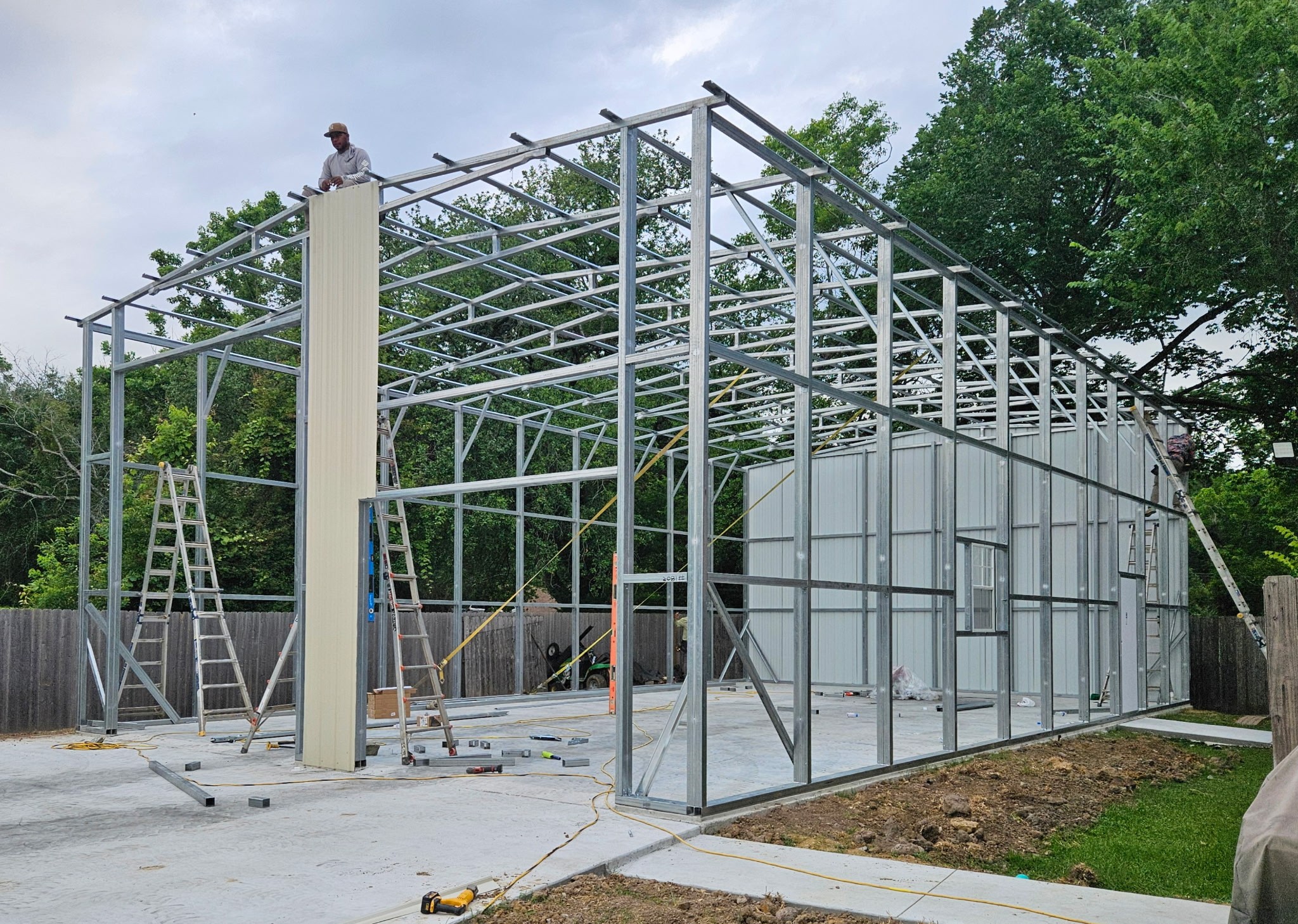
If you are still designing your garage, insulation is easier and more cost-effective to plan upfront. You can choose panel types, framing layouts, vapor control, and ventilation features that support the insulation system from the beginning. That usually leads to better performance and a cleaner finish.
Retrofitting an existing metal garage is still possible, but the best path depends on the current structure. Some older buildings were never intended to carry interior finishes or thick insulation layers. In those cases, spray foam or targeted roof insulation may be more practical than a full wall rebuild. This is where experienced guidance matters. A custom building should be matched to how you will actually use it, not forced into a one-size-fits-all solution.
When a higher investment makes sense
Not every insulated garage needs to feel like a house, but there are cases where spending more upfront is justified. If you store classic vehicles, run tools regularly, keep supplies that should stay dry, or use the garage as a daily workspace, comfort and moisture protection are part of protecting your investment.
That is also true if you are building once and planning to keep the structure for years. Better insulation can improve usability from day one and reduce the need for future upgrades. For many property owners, that kind of long-term value matters more than choosing the cheapest line item today.
At Essex Metal Buildings, that is why customization matters. The right garage is not just about width, height, and roof style. It is also about making sure the building works for your climate, your property, and the way you plan to use the space.
A metal garage should do more than stand up to the weather. It should be comfortable enough, dry enough, and practical enough to earn its place on your property every single day.