


The most common mistake people make buying a metal garage is going too small. A garage that barely fits the truck today has no room for the mower, the tools, or the second car tomorrow. Measure first, then pick the size — not the other way around.
Start with what you’re parking
Grab a tape measure and write down three numbers for each vehicle: length, width with the mirrors out, and height. Then add walking room — at least 2 to 3 feet around each side you need to get in and out of. A garage that fits the vehicle on paper but leaves you climbing out the window isn’t a fit.
One car
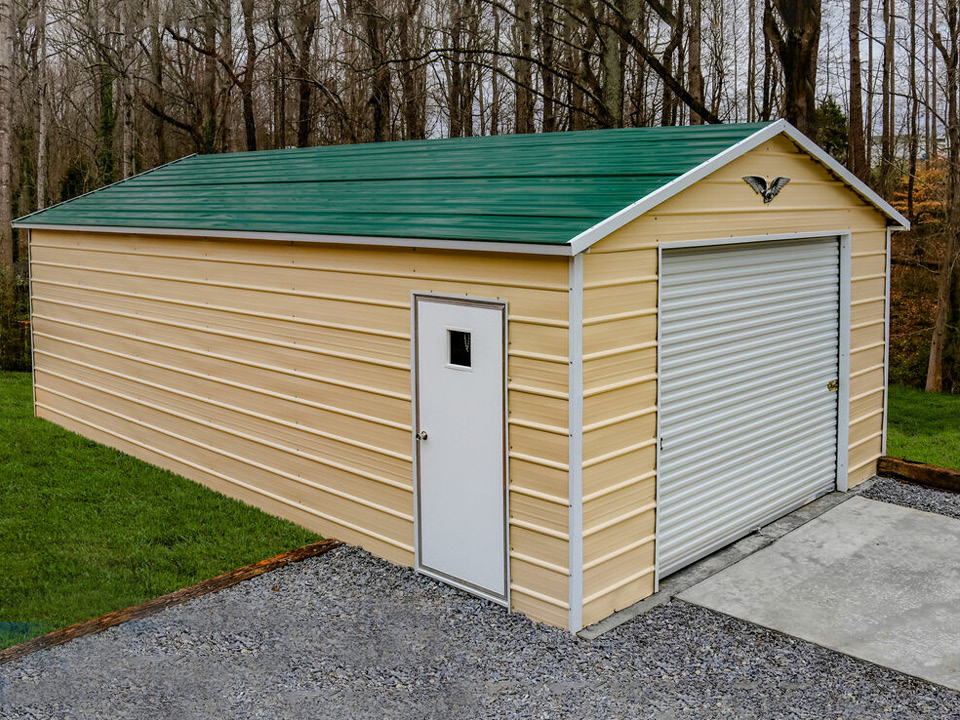
A 12×20 or 12×21 building covers a single car with a little storage room at the back. If you want a workbench, lawn equipment, or bikes in there too, step up to an 18×21.
Two cars
For two cars side by side, look at 20×20, 22×25, or 24×25. The 24-foot width is the comfortable choice — two full-size vehicles plus room to open both doors all the way. A 20-foot width works for two smaller cars, but it’s tight.
Trucks and full-size SUVs
Trucks need width and height. A 24×26 or wider building handles a full-size truck with room to spare, and taller leg height keeps the cab and any roof rack clear. Check the door height against your truck before you order — a standard door can be too short for a lifted truck.
RVs and boats
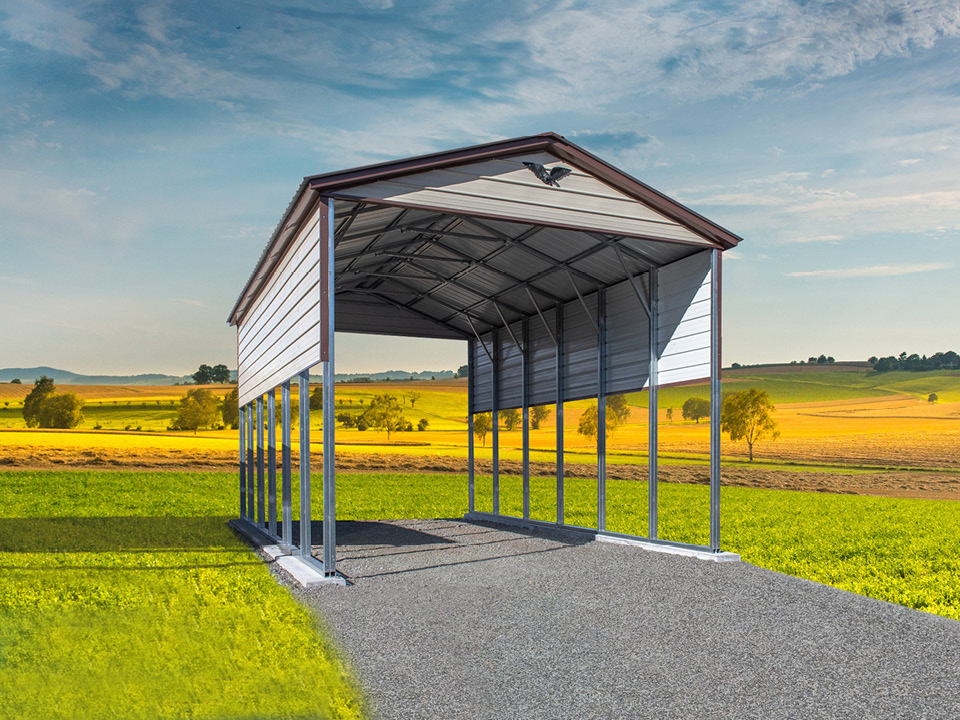
RVs and boats need length first. Most RVs need 30 to 40 feet of building length or more, plus a wide, tall door and taller legs — 12 to 14 feet is common. Measure the RV with any hitch, ladder, and AC unit included, and don’t guess on the door: the door has to clear the tallest point of the RV, not just the roof.
Workshop and storage
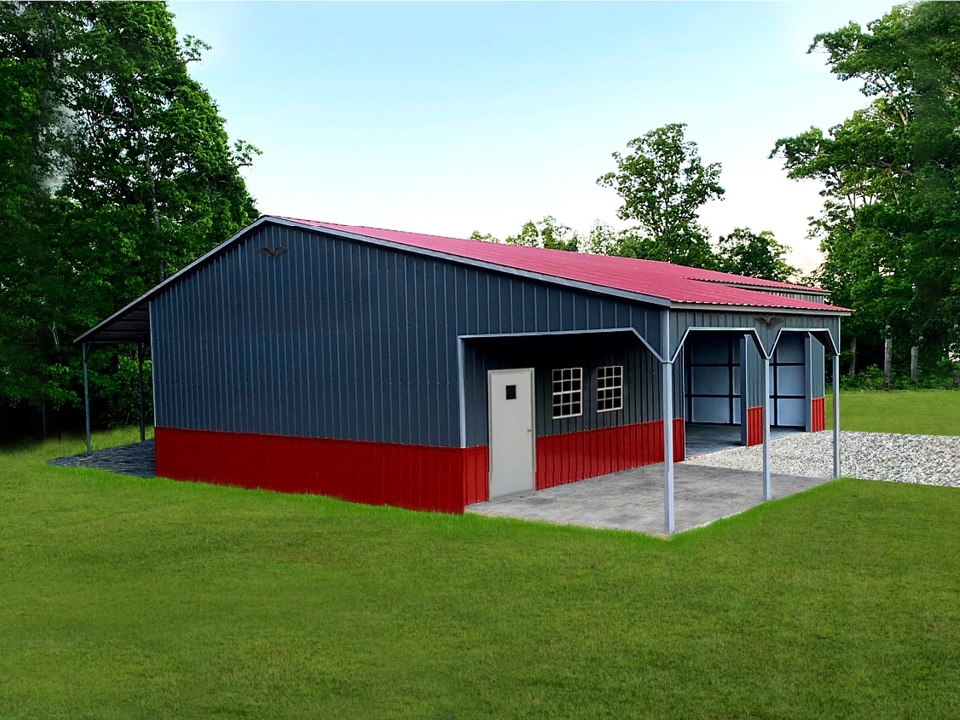
If the building is a workshop, size it for the work, not just the vehicle. A 24×30 gives you a vehicle bay plus a real work area. A 30×40 gives you a vehicle, a workbench wall, and storage without tripping over everything. List what’s going inside — workbench, tools, mower, ATV, boxes — and give each of them floor space on paper before you buy.
Height and doors matter as much as the footprint
Two things people forget: leg height and door size. Leg height sets how tall the walls are, which decides whether a lift, a tall truck, or an RV fits. Door width and height decide what can actually drive in. If you’re between sizes on either one, go up — you can’t add height later without rebuilding.
Measure before you order
A quick checklist before you request a quote:
- Length and width of each vehicle, mirrors out
- Height of the tallest vehicle, including racks and AC units
- What else lives in the building: mower, tools, workbench, storage
- Door swing and walking room on each side
- Where the building sits on your lot, and how much room the lot gives you
Check local rules
Setbacks, permits, and HOA rules vary by county and town. A quick call to your local zoning office before you order saves a headache later — they’ll tell you how far the building has to sit from the property line and whether a permit is needed.
Paying for it
Every building we sell is available through our Lease-to-Own program: buildings up to $30,000 with no credit check, a 17% deposit, and terms of 24, 36, 48, or 60 months. Terms of 24 to 36 months come with 90 days same as cash and no origination fees. Estimates shown on our site are plus local tax, and pricing varies by zip code, so every quote is built for your location.
Want numbers for the size you’re thinking about? Run an estimate on our Lease-to-Own calculator, then request a quote and we’ll price your exact building.
When in doubt, go one size up
Nobody ever complains their garage is too big. The cost difference between one size and the next is small compared to outgrowing the building in a year. Measure honestly, add room for what’s coming, and buy the size you’ll still be happy with five years from now.
Browse our shop for available metal buildings.