

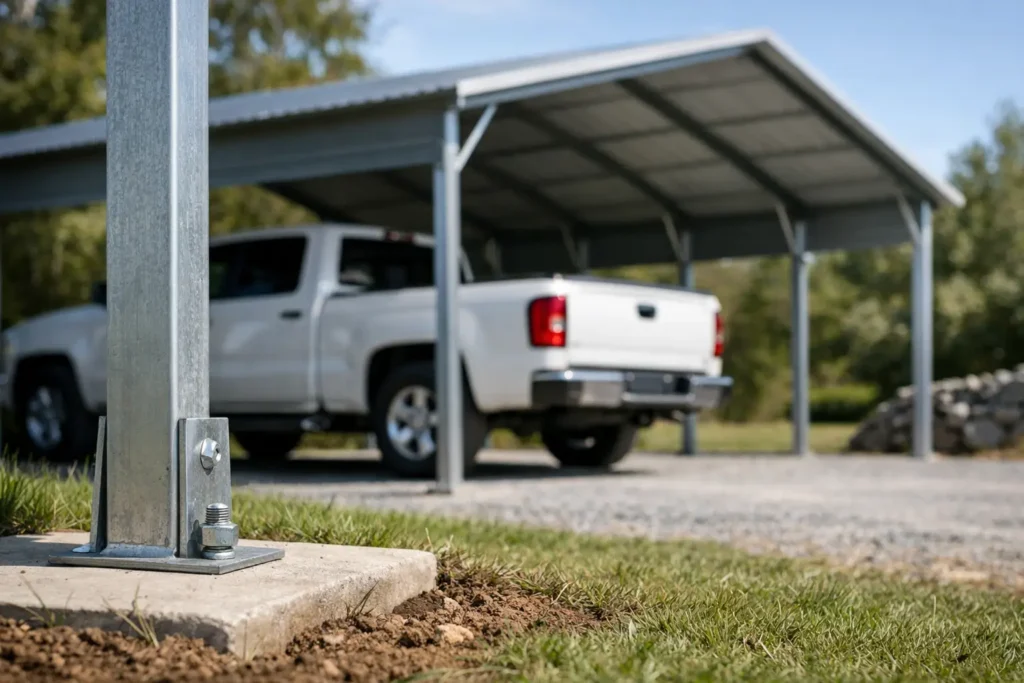
A metal carport that looks solid on delivery day can become a serious problem after the first high wind event if it is not properly secured. So, do metal carports need anchors? In most cases, yes. Anchors are a basic part of a safe installation because they help keep the structure in place, resist uplift, and support long-term performance on your site.
That said, the real answer depends on more than the building itself. Ground conditions, foundation type, local code requirements, carport size, and wind exposure all play a role. If you are planning to install a metal carport on a home site, farm, or commercial property, anchoring is not a minor detail. It is one of the most important parts of the job.
Why metal carports need anchors
Metal carports are engineered to provide open, efficient coverage for vehicles, equipment, boats, trailers, and outdoor work areas. But even a well-built steel structure can shift, rack, or lift if it is not attached correctly to the surface below it.
Anchors do three things at once. They help hold the frame against wind uplift, they reduce lateral movement, and they create a more stable connection between the carport and its foundation. Without that connection, the building is relying too heavily on its own weight, and that is rarely enough in real weather conditions.
This matters even more with taller units and wider spans. A small single-car carport and a large RV cover do not face the same wind loads. The more surface area a structure presents, the more force it may have to resist. That is one reason a professional site review and proper installation matter.
Do metal carports need anchors on every surface?
Yes, but the type of anchor changes with the installation surface. A metal carport installed on concrete needs a different anchoring system than one installed on gravel, asphalt, or bare ground.
The goal stays the same. The anchor system must match the base material and provide a reliable hold. Using the wrong anchor on the wrong surface can weaken the installation, even if the building itself is well made.
Anchoring to concrete
Concrete is usually the strongest and most stable base for a metal carport. When a slab is properly poured and cured, installers can use concrete anchors that create a secure connection to the structure’s base rails or legs.
This option often gives property owners the best combination of strength, clean appearance, and long-term performance. It is especially common for fully enclosed buildings, garages, and larger custom structures, but it is also an excellent choice for open carports.
Anchoring to asphalt
Asphalt can work in some situations, but it is generally less reliable than concrete for permanent support. Asphalt shifts more easily, softens in heat, and may not provide the same holding strength depending on thickness and condition.
That does not always mean asphalt is off the table. It means the site needs to be evaluated carefully, and in many cases additional support or an alternative base may be recommended.
Anchoring to gravel, soil, or ground
Ground installations are common for rural properties and agricultural uses, especially when buyers want a lower-cost setup or are covering equipment in open areas. In those cases, mobile home anchors or other earth anchoring systems may be used.
The challenge is that not all soil performs the same way. Loose fill, wet ground, rocky areas, and heavily shifting soil can all affect anchor performance. A dirt site may be acceptable, but only when the anchors are matched to the conditions and the area is properly prepared.
What happens if a carport is not anchored correctly?
The most obvious risk is movement during wind events. But the problem is bigger than a carport blowing over.
Poor anchoring can lead to frame stress, uneven settling, loose panels, twisted legs, and premature wear at key connection points. In some cases, the structure stays standing but gradually goes out of square, which can shorten its lifespan and create repair issues later.
There is also the issue of liability. If a detached or shifting structure damages vehicles, nearby property, fencing, or neighboring buildings, the cost can rise quickly. For that reason alone, anchoring should never be treated as optional just because the carport feels heavy enough.
Wind, weather, and local code all matter
One reason buyers ask whether metal carports need anchors is that they have seen similar structures installed in different ways. That is normal. Requirements can vary by region, county, and exposure.
A carport installed in a low-wind inland area may not need the same anchoring approach as one placed in an open field or a coastal region. Snow load may also influence design choices in some states, especially when combined with wind exposure and roof style.
Local code requirements often determine what is acceptable, and those rules can affect anchor spacing, foundation type, and whether engineered plans are needed. That is why a custom quote and guided installation process are so valuable. You are not just buying a frame. You are making sure the structure fits your property and complies with real site conditions.
The foundation is just as important as the anchor
An anchor is only as reliable as the material holding it. If the slab is too thin, the ground is unstable, or the site is poorly graded, the anchor system may not perform the way it should.
That is where many problems start. Buyers focus on roof style, dimensions, and panel color, but the foundation work determines whether the building has the support it needs over time.
For example, a concrete slab should be sized and prepared for the actual structure being installed. A site that holds water or has poor drainage may need correction before setup. On ground installations, leveling and compaction can make a major difference in long-term stability.
Can you install a metal carport without anchors temporarily?
Some property owners ask this when they want a short-term cover or think they may move the structure later. While portability may be part of the appeal of certain metal buildings, that does not mean the carport should ever be left unsecured during use.
Even temporary setups need a safe installation method. Weather does not wait until a building becomes permanent. If the structure is on your property and exposed to the elements, it needs to be anchored appropriately for that condition.
If future relocation is part of your plan, that should be discussed upfront so the building design and installation approach can support that goal as much as possible.
How to know what anchor system your carport needs
The right answer usually comes from four site-specific details: the size of the building, the installation surface, local wind exposure, and code requirements in your area.
That is why a one-size-fits-all answer is not enough. A 12-by-21 carport on a residential concrete pad is a different project from a triple-wide farm carport installed on open ground. Both need anchors, but not necessarily the same kind or layout.
A dependable supplier should ask about your location, intended use, and site conditions before recommending a final setup. If they do not, that is a red flag. Proper anchoring is part of responsible building guidance, not an afterthought.
At Essex Metal Buildings, that practical, property-specific approach is part of helping customers order a structure that fits the way they actually live and work.
A better way to think about anchors
It helps to stop thinking of anchors as an accessory. They are not an add-on for extra caution. They are part of the structural system.
When your metal carport is anchored correctly, the building performs the way it was meant to perform. It stands up better to wind, stays aligned longer, and gives you more confidence that the investment is protected. That matters whether you are covering a daily driver, farm equipment, an RV, or a work vehicle that cannot afford exposure.
If you are comparing options, ask not just what the carport costs, but how it will be installed, what it will be anchored to, and whether that plan makes sense for your property. A good building starts with good steel. A lasting one starts with the right connection to the ground.
Before you move forward, make sure your carport is designed for your site, not just your budget. That single decision can save a lot of trouble later.