A metal building project usually feels urgent long before installation day arrives. Maybe you need covered storage before the weather turns, a garage before another vehicle ends up in the driveway, or a barn before equipment starts sitting out in the open. That is why understanding the metal building installation timeline matters early. The real schedule is not just about crew labor on build day. It includes design decisions, permitting, manufacturing, site prep, delivery coordination, and the conditions on your property.
For most buyers, the biggest mistake is assuming the timeline starts when the installers show up. In reality, the clock starts when you begin planning the building. The more customized the structure, the more important it is to line up each phase in the right order.
What affects the metal building installation timeline?
There is no single timeline that fits every project. A basic carport on a level site can move much faster than a fully enclosed garage with doors, windows, insulation, and a concrete foundation. The type of building, the size, the roof style, local permit rules, and the readiness of your site all play a part.
Customization is one of the biggest variables. If you are ordering a standard-size structure with common options, production and scheduling can be fairly straightforward. If you are designing a made-to-order workshop or agricultural building with specialty dimensions and added features, that usually takes more coordination. That extra time is often worth it because the finished building actually fits your property and the way you plan to use it.
Your location matters too. Delivery routes, regional demand, weather patterns, and local code requirements can all affect the schedule. In some areas, permits move quickly. In others, permit approval can become the slowest part of the process.
A realistic installation timeline from start to finish
The easiest way to think about the process is in phases. Some phases move quickly. Others depend on third parties like local permitting offices, concrete crews, or weather windows.
1. Design and quoting
This phase can take a day or several weeks depending on how prepared you are. If you already know your preferred width, length, height, roof style, and use case, you can move through design much faster. If you are still deciding between an RV cover, garage, workshop, or barn layout, expect more back and forth.
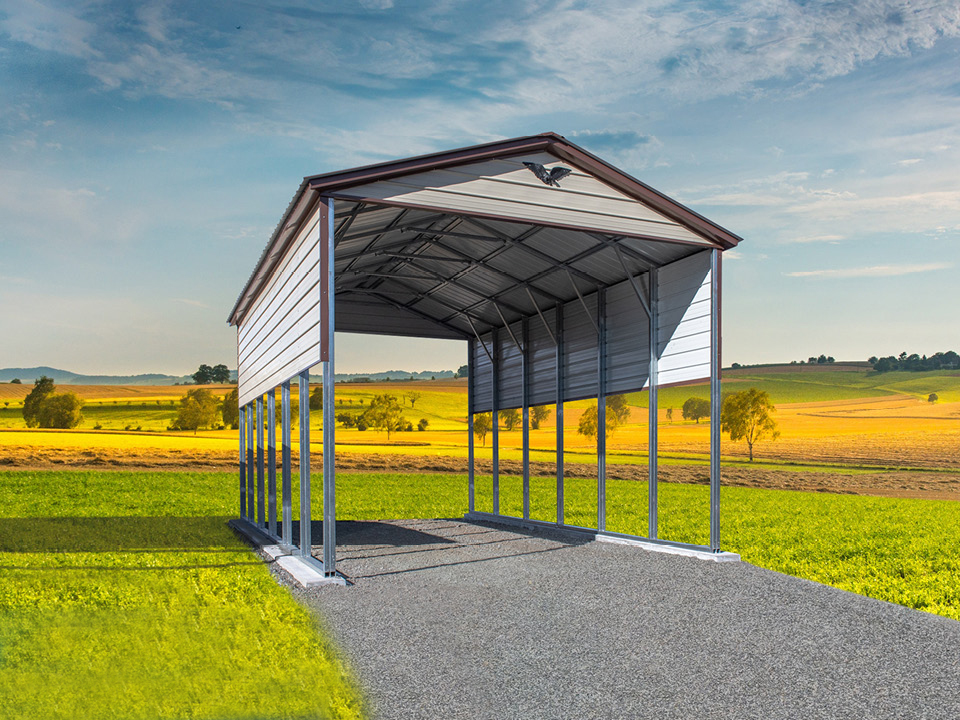
This is also when practical questions should get answered. Will the building sit on gravel, asphalt, or concrete? Do you need vertical roofing for better drainage? Will you need extra height for a lift, tractor, camper, or trailer? Good planning here prevents expensive changes later.
For many buyers, this phase speeds up once they can actually visualize the structure. A custom design process with clear pricing helps remove guesswork and keeps the project moving.
2. Permits and approvals
If your county or city requires a permit, this step can be quick or frustratingly slow. Some buyers can secure approval in a few business days. Others may wait several weeks, especially if engineering documents, setback reviews, or site plan revisions are involved.
This is one area where timelines often slip. Buyers may assume the building can be ordered first and paperwork can catch up later. Sometimes that works, but often it creates risk. If permit requirements change the approved size, placement, or foundation details, you do not want to find that out too late.
If you are unsure whether permits are required, ask early. It is far better to clarify local rules before manufacturing and delivery are scheduled.
3. Manufacturing
Once the order is finalized and approved for production, the building moves into manufacturing. The timeline here depends on plant capacity, seasonality, material availability, and the complexity of your structure.
This is where buyers sometimes expect an off-the-shelf experience, but custom metal buildings are made to order. That is a good thing for fit and function, but it does mean production takes planning. During busy seasons, lead times can stretch. In slower periods, they may move more quickly.
For a straightforward structure, manufacturing may be relatively fast. For larger or highly customized buildings, it can take longer. If timing is critical, ask about current production lead times before you finalize your design.
4. Site preparation
Site prep can happen while manufacturing is underway, and that overlap is one of the best ways to keep your project on track. This phase may include clearing vegetation, grading the pad, improving access for delivery trucks, and preparing the foundation surface.
A level, well-prepared site helps installation go faster and reduces the chance of delays. If a crew arrives and the ground is not ready, too wet, too uneven, or blocked by fencing, trees, or soft soil, installation may need to be postponed.
Concrete adds another layer to the schedule. If your building will sit on a slab, that work needs to be completed correctly and given enough time to cure based on the installer’s requirements. Rushing this step can create avoidable problems.
How long does installation actually take?
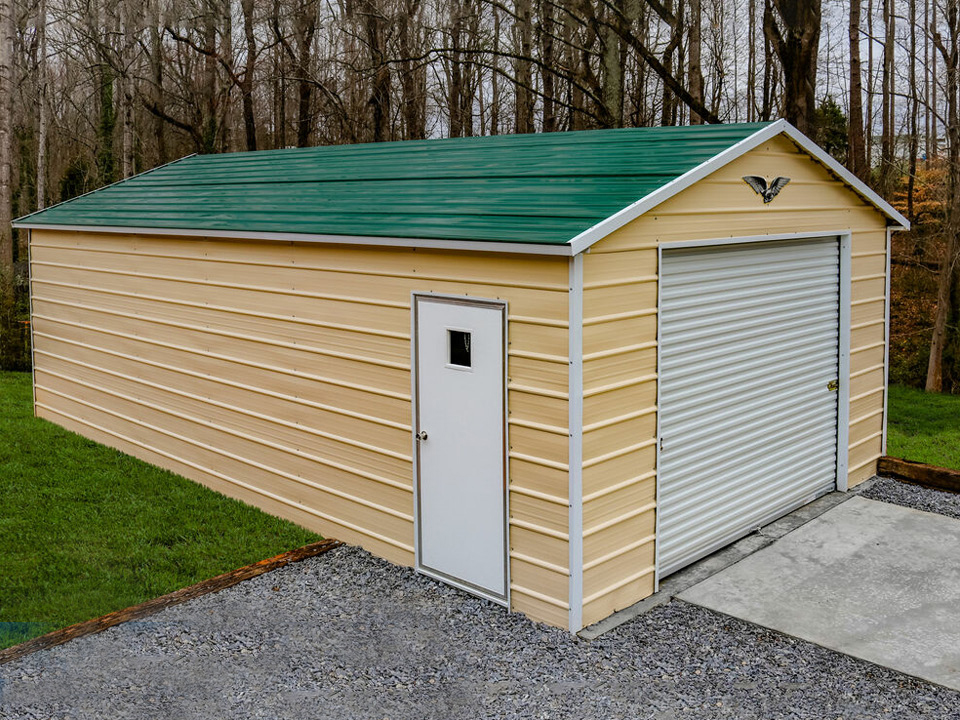
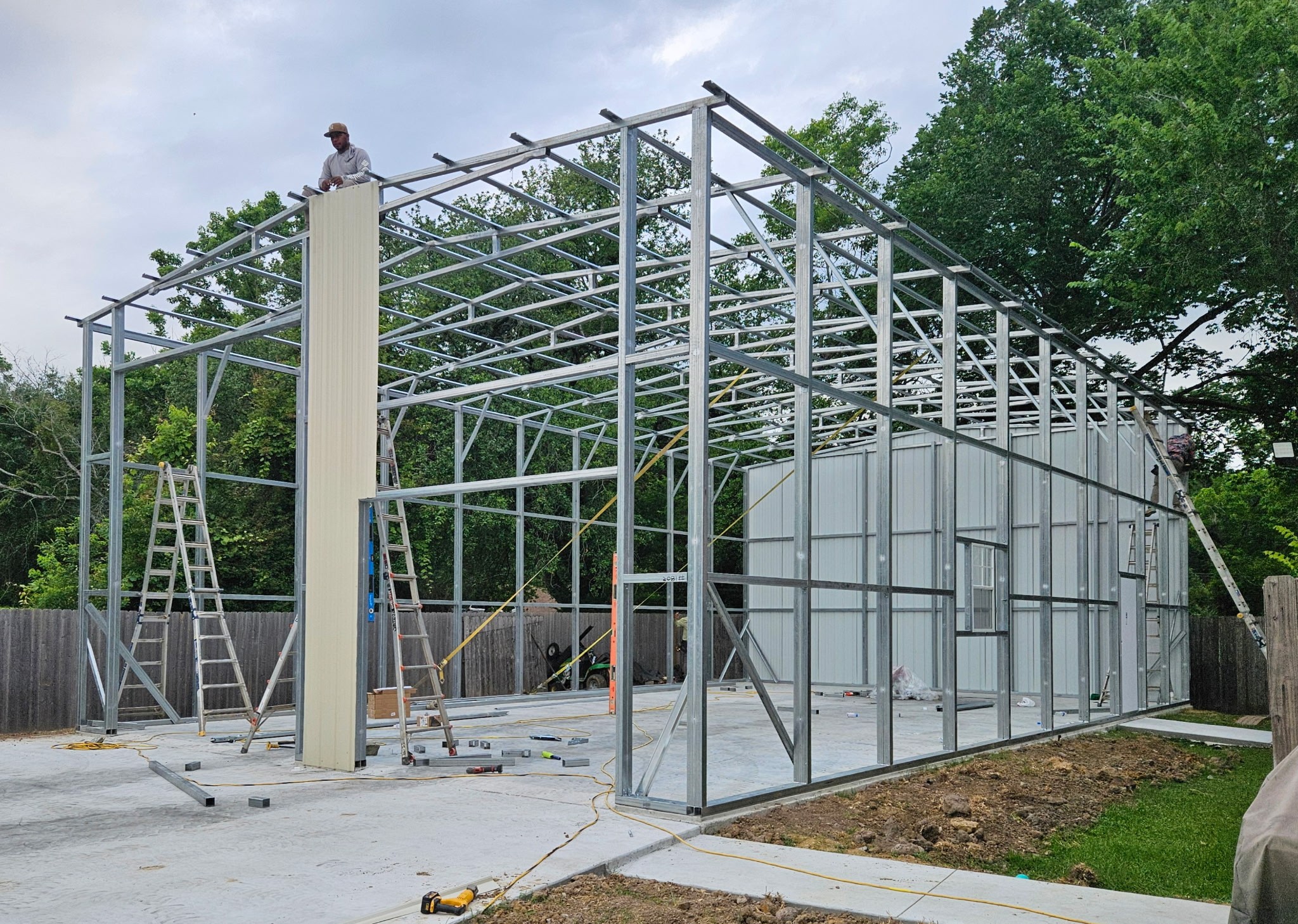
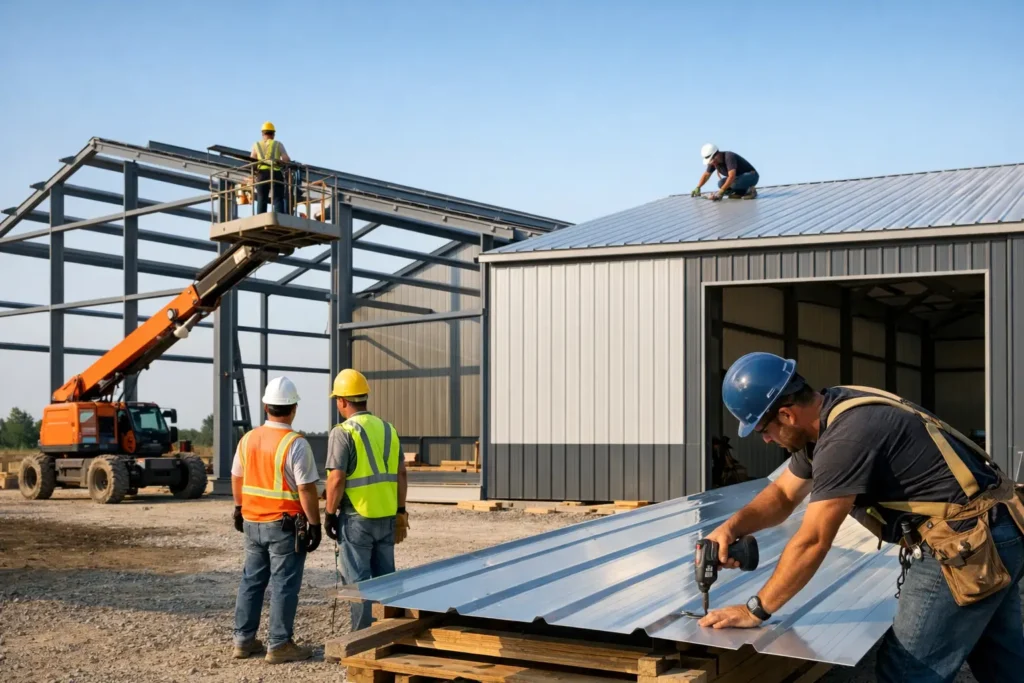
The on-site installation phase is usually much shorter than the full project timeline. A small, simple metal carport might be installed in a day. A larger enclosed garage, barn, or workshop can take several days. Bigger commercial or highly customized structures may take longer.
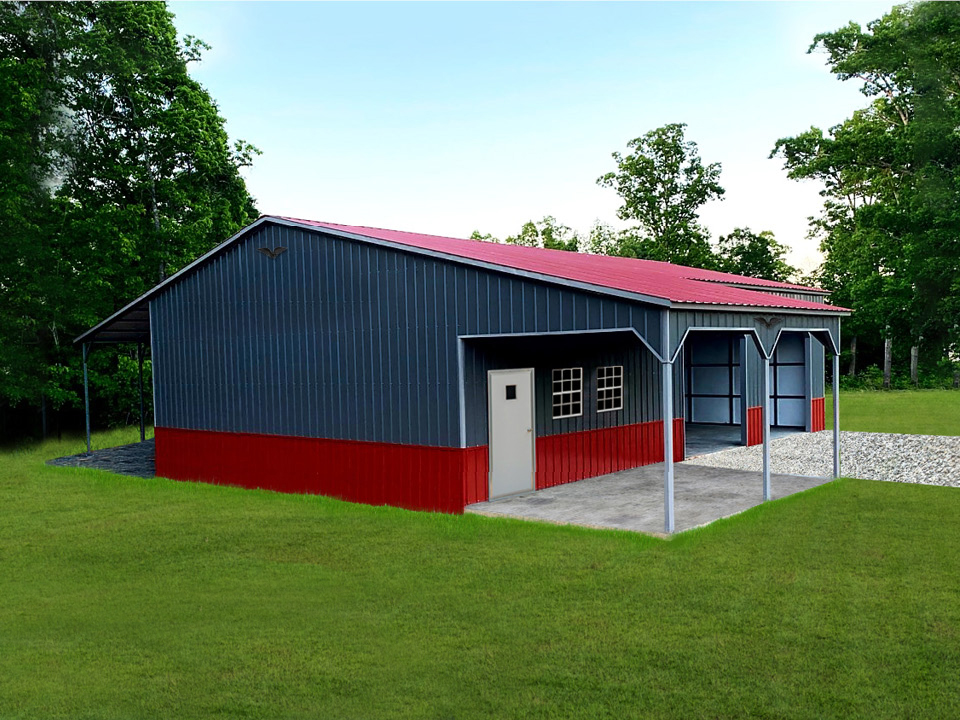
That said, installation speed depends on conditions being right. Crew size, site access, wind, rain, foundation readiness, and building complexity all matter. Doors, trim, lean-tos, insulation, and custom framing details can add time, even when the footprint itself is not especially large.
Buyers are often surprised by this contrast. Weeks may go into planning, permitting, and production, but the actual assembly can move quickly once everything is lined up. That is why preparation matters so much.
Common reasons timelines get delayed
Most delays are not random. They usually come from a few predictable issues.
Weather is one of the biggest. Wet ground can affect access and anchoring. High winds can make installation unsafe. Even when manufacturing stays on schedule, a stormy installation window can push things back.
Permit holdups are another common issue. Missing paperwork, revised site plans, or local review backlogs can add days or weeks. Site readiness causes plenty of delays too. If grading is incomplete or the concrete is not ready, the crew may have no choice but to reschedule.
Changes after the order is finalized can also affect the metal building installation timeline. If you decide to increase height, add enclosed panels, change doors, or rework dimensions after production planning has started, expect a schedule impact. Some changes are simple. Others reset parts of the process.
How to keep your project moving
The best way to protect your timeline is to make decisions early and confirm details before the order goes into production. Know how you plan to use the building, where it will sit, and what local rules apply. If the structure needs to house an RV, tractor, boat, or business inventory, measure carefully instead of estimating.
It also helps to treat site prep as part of the project, not a side task. Access matters. Slope matters. Drainage matters. If your lot needs clearing, fill, or concrete work, schedule that work with enough cushion.
Communication makes a difference as well. A good provider should help you understand what happens next, what is needed from you, and where the schedule could shift. That kind of guidance is especially valuable for first-time buyers who want a smooth process without chasing down every detail themselves.
For many property owners, this is where working with a company like Essex Metal Buildings can make the experience much easier. When design, quoting, delivery coordination, and installation support are handled in a guided process, it becomes much simpler to plan around real dates instead of guesswork.
Planning your timeline around your actual needs
If you need the building by a specific season or deadline, work backward. Do not just ask when installation can happen. Ask when design should be finalized, when permits should be submitted, and when site work needs to begin.
For example, if you want a garage ready before winter, do not wait until the first cold snap to start. If you need an equipment cover before harvest, give yourself enough time for manufacturing and pad preparation. The earlier you plan, the more flexibility you usually have.
There is also a trade-off between speed and customization. If your top priority is getting coverage in place as fast as possible, a simpler design may shorten the process. If your priority is getting the exact layout, clearance, and features you need, a longer timeline may be the better investment.
What to expect after installation
Once installation is complete, the project may still include a final walkthrough, anchor verification, cleanup, or local inspection, depending on your area and building type. That phase is usually much shorter, but it still matters.
This is the point where buyers can confirm that doors operate properly, trim and panels are finished correctly, and the building matches the approved design. If the structure will support storage, livestock use, vehicle protection, or shop work, those final details make a real difference in day-to-day use.
A realistic timeline is not about slowing you down. It is about helping you avoid surprises, protect your investment, and get a building that is ready when you need it. Start early, prepare the site carefully, and ask direct questions before each phase begins. That is how a metal building project stays practical, predictable, and worth the wait.