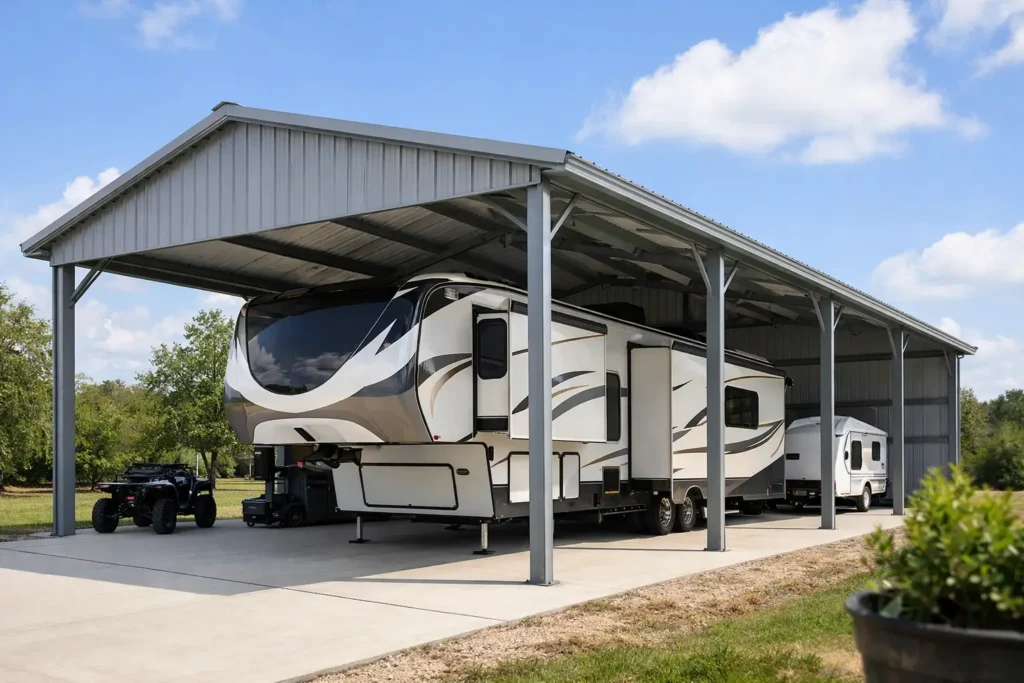
An RV parked in the open does not stay “like new” for long. Sun breaks down finishes, rain finds weak seals, and heavy snow or falling debris can turn a minor issue into an expensive repair. That is why many owners start looking at an rv cover metal building once they realize a tarp or basic canopy is only a short-term fix.
A well-built metal RV cover gives you something better than temporary protection. It creates a dedicated shelter sized for your coach, your property, and the way you actually use your space. If you are comparing options, the right choice usually comes down to three things – clearance, structural strength, and how much flexibility you want now versus later.
Why an RV cover metal building makes sense
Most RV owners are trying to solve a practical problem, not make a design statement. They want to keep their vehicle protected, avoid unnecessary maintenance, and make it easier to store the RV at home. A metal structure does all three.
Steel covers hold up well against the conditions that wear RVs down fastest. Constant UV exposure can fade paint, dry out seals, and shorten the life of rubber roofing components. Rain and ice add more stress, especially when water sits for long periods. A covered structure helps reduce that exposure day after day, season after season.
There is also a convenience factor that matters more than many buyers expect. When your RV has a dedicated covered space, loading for a trip is easier, basic maintenance is more comfortable, and long-term storage feels more organized. You are not moving vehicles around or trying to fit a large trailer into an improvised spot.
For many property owners, a metal RV cover also makes more financial sense than building a fully enclosed garage right away. It gives strong overhead protection at a lower entry cost, while still allowing custom sizing and upgrades.
Open RV cover or fully enclosed building?
This is one of the first decisions to make, and there is no one-size-fits-all answer.
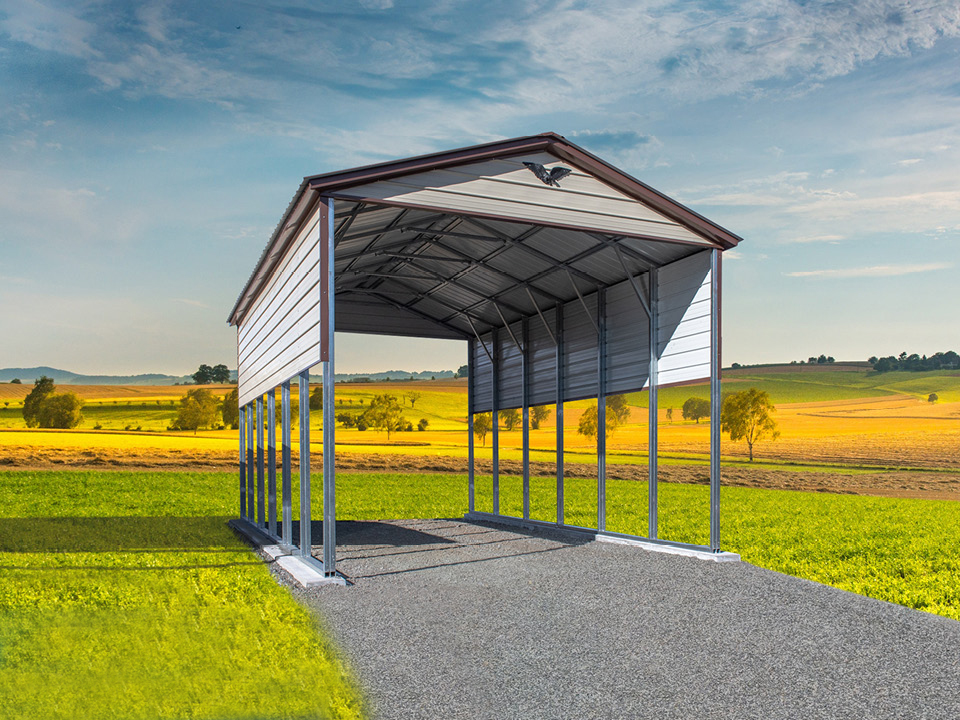
An open RV cover is usually the best fit for buyers who want overhead protection, easy pull-through access, and a lower overall price. It works well if your main concern is shielding the RV from sun, rain, snow, and tree debris. Side panels can be added for more coverage without moving all the way to a fully enclosed structure.
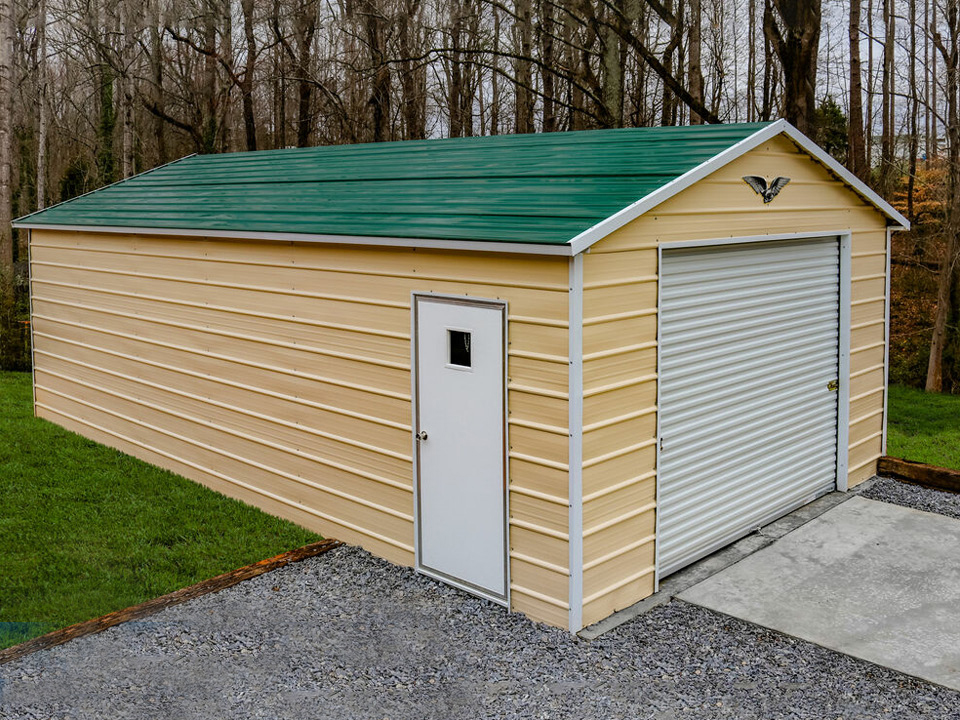
A fully enclosed metal building gives you more security and more weather protection, especially in areas with driven rain, strong winds, or blowing snow. It is also a better fit if you want to store tools, parts, or additional equipment with the RV. The trade-off is cost, along with more planning around doors, ventilation, and site layout.
For some buyers, the smart middle ground is a custom RV cover with partial side panels, end gables, or one enclosed side. That setup can deliver a lot of protection without the full cost of a closed building.
Sizing your RV cover metal building correctly
The biggest mistake buyers make is sizing too tight. Your RV may technically fit under a structure on paper, but that does not mean it will be easy to back in, open compartments, or access the roofline safely.
Height matters first. You need enough clearance for the RV itself, plus rooftop AC units, vents, antennas, or other accessories. Then add room for comfortable entry and exit. A low structure may save money upfront, but it can create daily frustration and leave very little margin for error.
Width matters just as much. If your mirrors nearly touch the posts every time you park, the building is not really working for you. Extra width makes backing in easier and gives you room to move around the RV, open storage doors, and handle maintenance.
Length should cover the full vehicle with reasonable overhang protection where appropriate. If the rear bumper or front cap sits exposed, you lose part of the benefit. Buyers who tow, travel often, or plan to upgrade RVs later usually do better with a little more length than they think they need.
If you also want room for a truck, side-by-side, mower, or utility storage, plan for that now. Expanding later can be possible, but it is usually easier and more cost-effective to build for your real use from the start.
Roof style and structure strength
Not all metal covers are built the same, and roof style changes both appearance and performance.
A regular roof is often the most economical option, but it is generally better suited for smaller structures and milder weather patterns. For an RV cover, many buyers prefer an A-frame design because it offers a more residential look and typically handles drainage more effectively.
Vertical roofs are often the preferred choice for larger RV covers and areas that deal with heavier rain or snow. With vertical panels, water, leaves, and debris tend to shed more efficiently. That can reduce maintenance and improve long-term performance.
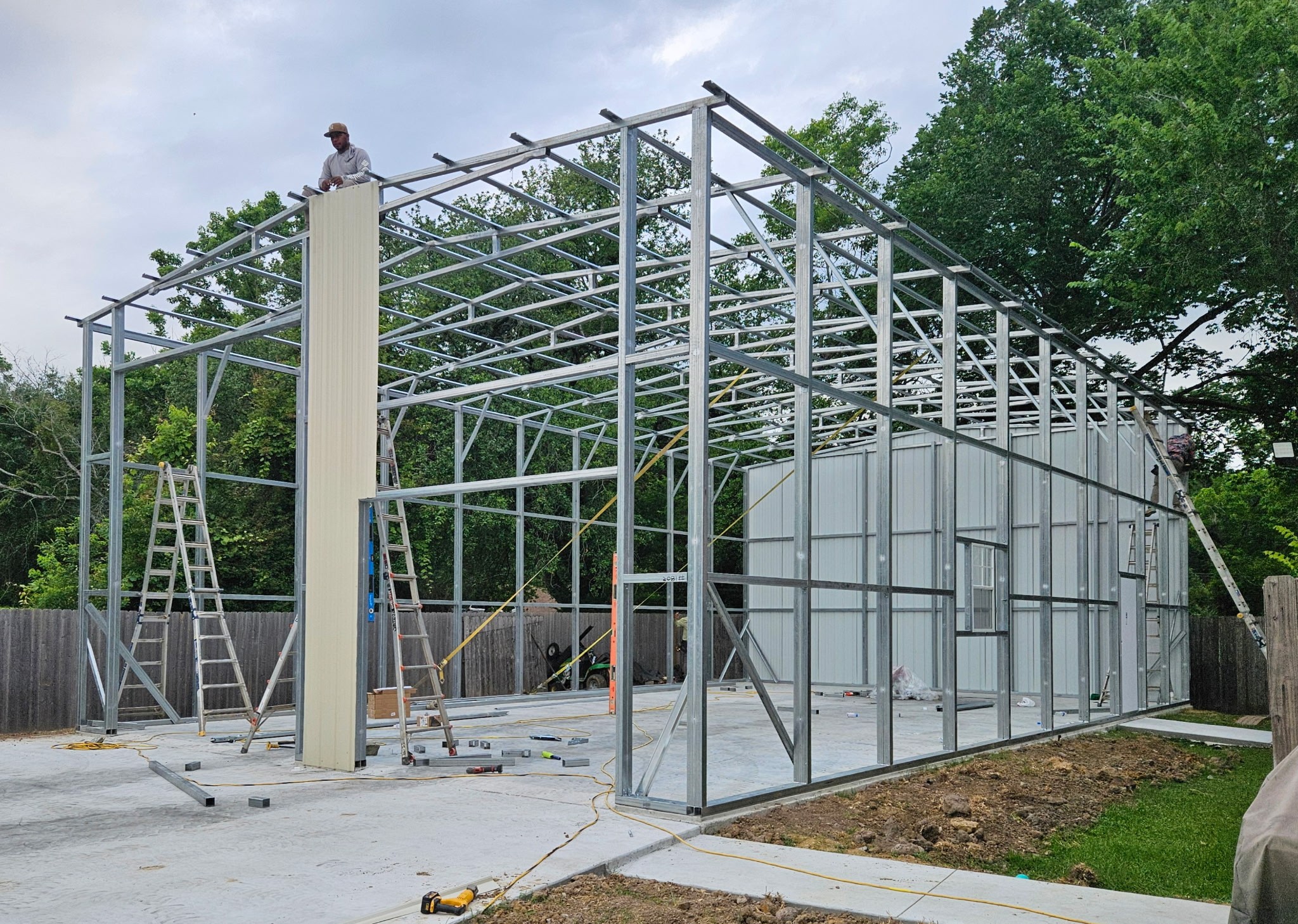
Gauge, framing design, anchoring method, and certification also matter. A structure that looks similar online may perform very differently once local wind or snow loads come into play. That is where custom guidance is important. The right building should be designed for your site conditions, not just sold as a generic package.
Site prep is part of the building
A quality structure starts with the ground it sits on. Buyers sometimes focus so much on dimensions and options that they overlook the site itself.
Your pad should be level, accessible for delivery and installation, and appropriate for the structure type. Common base options include gravel, asphalt, and concrete, depending on the building and local requirements. Concrete often provides the cleanest finish and can be ideal if you want maximum stability, but gravel can work well in many cases too.
Drainage should never be an afterthought. If water pools around the building, you may create muddy access, erosion, or long-term site problems. The best RV cover is not just tall enough and wide enough. It is also positioned and installed where water moves away from the structure instead of collecting under it.
You will also want to check local permitting, setback rules, and HOA restrictions if those apply. A smooth project usually starts with confirming those details before manufacturing and delivery are scheduled.
Upgrades worth considering
The right upgrades depend on how you use your RV and how much protection you want.
Side panels are one of the most valuable additions because they block low-angle sun and wind-driven rain. End panels can improve coverage further. If your RV sits for long periods, that extra shielding can make a noticeable difference.
Extra height or width is another upgrade that rarely gets regretted. It is much easier to live with a little extra space than not enough. If you may switch RV models later, this becomes even more important.
Certified engineering for local weather loads is worth serious consideration in areas prone to storms or snow. Anchoring options should also match your site conditions. These are not flashy upgrades, but they are the parts that affect how your structure performs when weather gets rough.
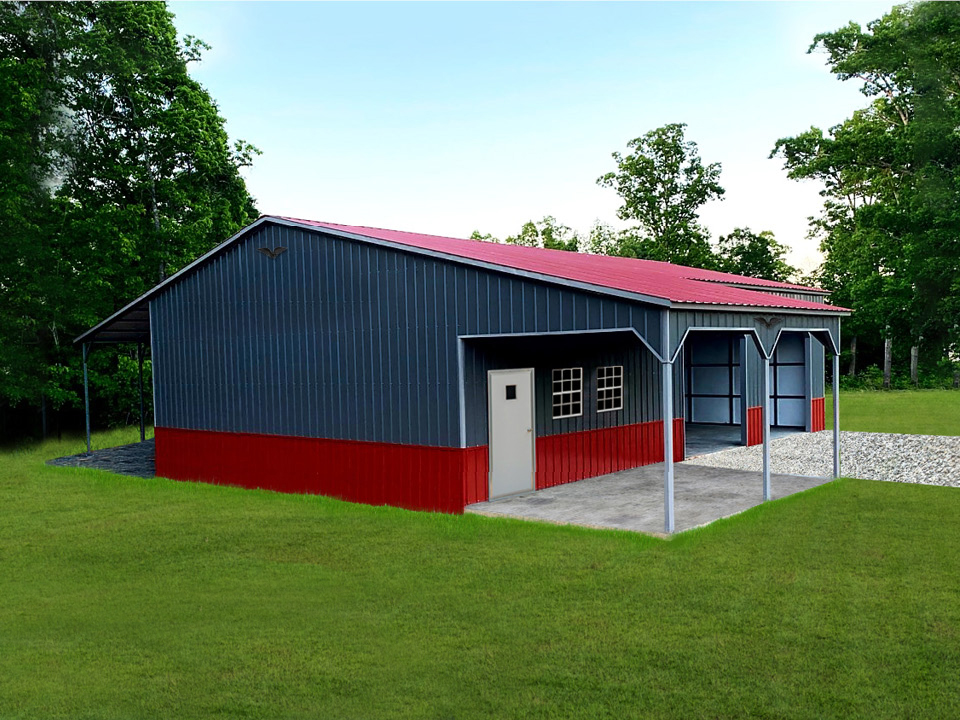
If you want the building to do more than shelter the RV, consider enclosed storage sections, utility space, or a combo layout. Many property owners use their structure for more than parking, and custom design gives you room to solve several needs with one building.
What affects price
Price depends on size, height, roof style, certification requirements, added panels, and site conditions. Installation logistics can also affect the final number, especially if access is tight or the site needs additional prep.
That is why comparing quotes only by base price can be misleading. One building may look cheaper until you realize it is undersized, uncertified for your area, or missing key features you actually need. A fair quote should reflect the real structure you want installed on your property, not a stripped-down version that leaves out essentials.
This is also where a custom buying process helps. If you can see your dimensions, choose options clearly, and talk with someone who understands local requirements, you are much more likely to end up with a building that fits your needs and budget.
Choosing a supplier you can trust
An RV cover is not a throwaway purchase. You want clear communication, realistic timelines, quality materials, and support that continues past the first quote.
Look for a company that helps you customize the building instead of pushing a generic size. Ask how delivery and installation are coordinated. Make sure the structure is built for your region and your intended use. If financing matters, ask about that early so you can compare the right options.
At Essex Metal Buildings, that customer-first approach matters because most buyers are not just shopping for steel. They are trying to protect a major investment, make better use of their property, and get the job done without confusion.
The best rv cover metal building is the one that fits your RV, your land, and your weather without forcing compromises you will notice every time you park under it. If you plan carefully now, you can end up with a structure that keeps working for years and feels right from day one.