

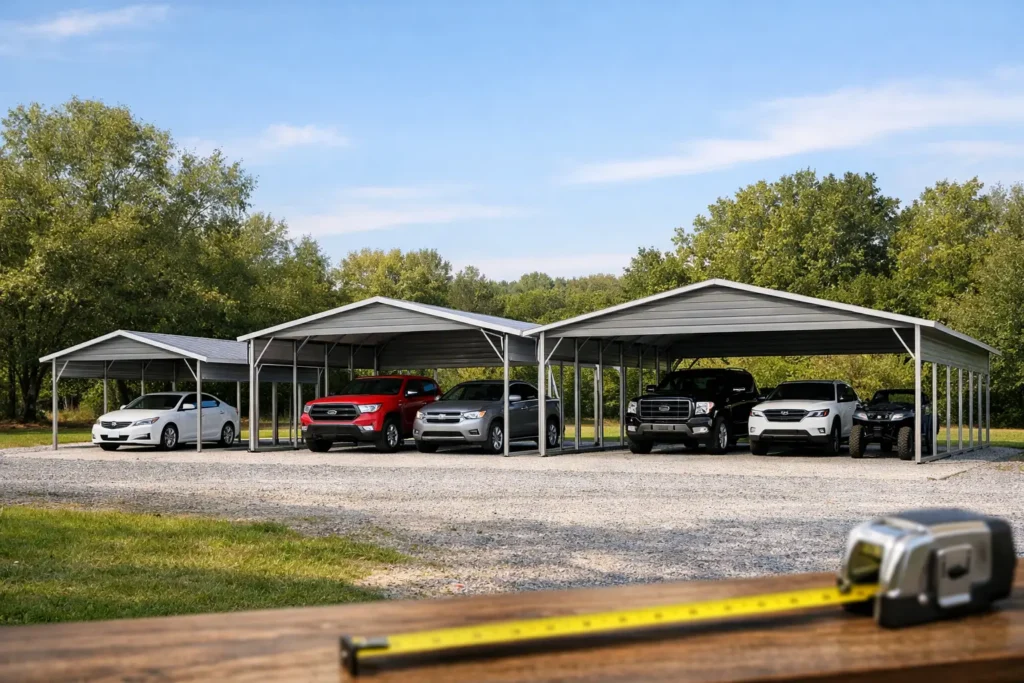
A carport that looks big enough on paper can feel too tight the first time you open a truck door, back in with mirrors out, or try to park beside a second vehicle. That is why a metal carport width guide matters before you order. Width affects daily convenience, long-term usefulness, and whether your structure actually fits the way you live.
Most buyers start by thinking about vehicle length or height. Those matter, but width is usually where regrets show up. A carport that is too narrow can make parking frustrating, limit future use, and leave very little room for people, tools, or storage along the sides. A carport that is too wide may cost more than necessary and take up valuable yard or drive space. The right width is the one that protects your vehicles without making you pay for space you will never use.
Why width matters more than many buyers expect
When you measure a vehicle, it is easy to focus on the body width listed by the manufacturer. Real-world parking takes more room than that. You need space for mirrors, door swing, walking clearance, and a little margin for backing in straight. If you plan to store lawn equipment, bikes, feed, or tools under the same roof, that side clearance matters even more.
Width also affects how flexible the structure will be later. A carport that fits one sedan today may not work well if you upgrade to a full-size pickup next year. The same goes for families adding another vehicle, landowners storing side-by-sides, or small business owners parking work trailers. Choosing width with a little foresight usually costs less than replacing an undersized structure later.
Metal carport width guide by vehicle type
A practical metal carport width guide starts with how many vehicles you want to cover and what kind of clearance you want around them.
Single-car metal carports
For one compact car or midsize sedan, a 12-foot-wide carport is a common starting point. It can work well when space is limited and the goal is basic overhead protection. That said, 12 feet can feel narrow if you want comfortable door access or if your driveway approach is tight.
A 14-foot-wide carport gives most owners more breathing room. It is often a better fit for SUVs, crossover vehicles, and small pickups. You get easier parking and more usable side space without making the structure dramatically larger.
If you drive a full-size truck or simply want less hassle getting in and out, 16 feet wide is often the sweet spot for a single vehicle. It is also a smart choice when the carport may need to handle different vehicles over time.
Two-car metal carports
For two vehicles, 18 feet wide is usually too tight unless both are very small and you do not mind minimal clearance. Most buyers looking for true day-to-day usability should start at 20 feet.
A 20-foot-wide carport works for many standard two-car setups, especially with sedans or smaller SUVs. If both drivers need easy entry and exit, or if one vehicle is a truck, 22 to 24 feet often feels much more practical.
A 24-foot-wide carport is one of the most popular sizes for a reason. It gives two vehicles a more comfortable fit and leaves less chance of bumping doors or crowding mirrors. For households with larger vehicles, that extra width is usually money well spent.
Three-car and oversized setups
If you need protection for three vehicles, wider farm equipment, or a combination of trucks and trailers, widths of 26 to 30 feet or more may make sense. At that point, the best width depends heavily on layout. Three small vehicles parked side by side need something different than two trucks plus a mower or side-by-side.
This is where custom sizing becomes valuable. Standard widths are useful benchmarks, but they do not solve every property or storage need.
The clearance mistake that causes most sizing problems
The biggest sizing mistake is measuring only vehicle width and stopping there. For example, a truck may be around 80 inches wide without mirrors, but the usable parking width needs to account for far more than that. Mirrors, turning angle, parking tolerance, and human movement all eat into the available space.
A good rule is to think in zones, not just object dimensions. You need a vehicle zone, an access zone, and a forgiveness zone. The access zone is what lets people get in and out comfortably. The forgiveness zone is what keeps everyday parking from becoming a chore.
That is especially important if the carport will sit beside a fence, home, garage, or property line. A structure can technically fit while still being awkward to use. Smart sizing means planning for how the carport functions after installation, not just whether it fits on a drawing.
Roof style and frame design can influence usable width
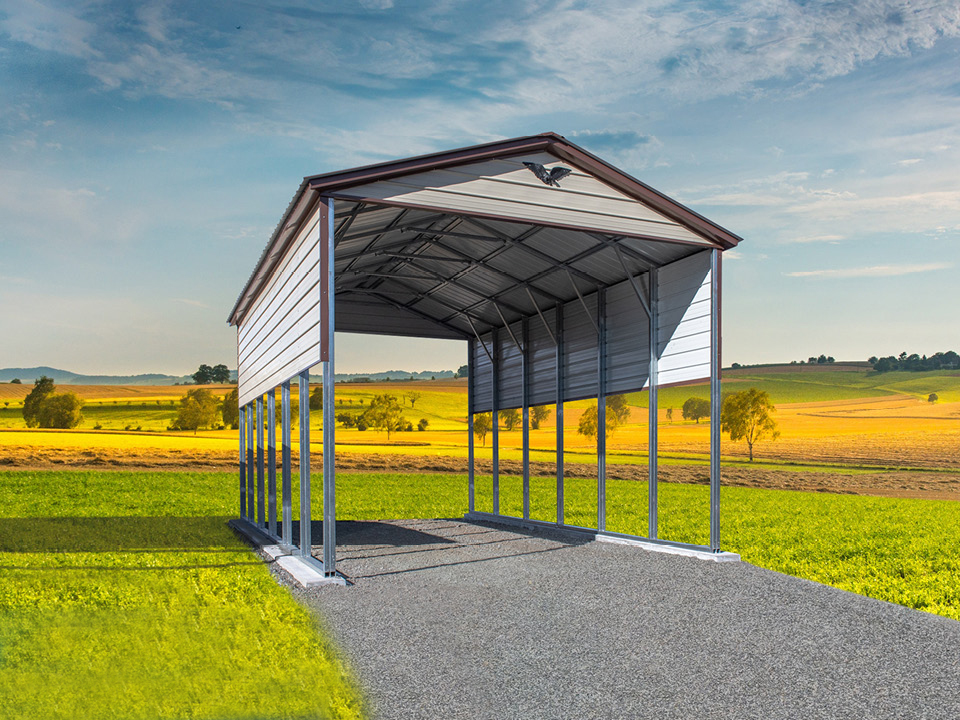
Not all covered space feels the same once the frame is in place. Depending on the structure design, support placement and side height can affect how open the carport feels. This matters when you are parking wide vehicles, opening doors, or combining vehicle storage with equipment storage.
For many buyers, width decisions also connect to roof style. A regular roof, boxed-eave roof, or vertical roof may each serve different priorities depending on weather exposure, appearance, and budget. Width alone should not be chosen in isolation. The best result comes from pairing the right width with the right frame and roof configuration for your climate and usage.
Property layout matters just as much as vehicle size
A wider carport is not always the better buy if your site makes access difficult. Driveway angle, turning radius, slope, and nearby structures all affect how easily you can pull in. Sometimes a slightly wider carport solves the issue. In other cases, adjusting the placement or orientation is the better move.
For rural properties, width may also depend on whether the structure needs to serve more than one purpose. Many buyers want a carport to cover a truck today and double as equipment storage, hay cover, or a small work area later. In those cases, sizing a little wider can add real long-term value.
Homeowners in tighter suburban lots may need to balance ideal width against setbacks and available slab or ground area. That is where a made-to-order approach helps. Instead of forcing your needs into a one-size-fits-all model, you can size the structure around the property you actually have.
When wider is worth the cost
There is always a budget conversation with custom structures, and that is fair. A wider carport costs more than a narrower one. The key question is whether the added width improves usability enough to justify the price.
In many cases, the answer is yes when you are covering full-size trucks, parking two daily drivers, or planning for future flexibility. A small jump in width can make parking easier every single day. That kind of convenience tends to matter more over time than the upfront savings of choosing the minimum size.
On the other hand, if the carport is for occasional vehicle cover and your space is limited, a leaner width may be the smarter option. The right answer depends on how often you will use the structure, what else it needs to store, and whether your vehicles are likely to change.
How to choose the right width with confidence
If you are unsure where to land, start with the largest vehicle you expect to park under the structure, not the smallest one you own now. Then consider whether you need side storage, easy passenger access, or room for a future second vehicle. Add site limitations after that, not before.
It also helps to think about frustration. If a width seems acceptable only when parking is perfect, it is probably too tight. Everyday use should feel easy, not precise.
This is where working with an experienced team can save time and money. A provider like Essex Metal Buildings can help you compare standard and custom widths based on your vehicles, property layout, and budget, so you get a structure that works in the real world instead of just on a spec sheet.
Metal carport width guide for better long-term value
The best metal carport width guide is not about chasing the biggest structure you can afford. It is about matching width to the way you park, store, and use your property. A carport should protect your investment and make daily life easier, not create a new inconvenience.
If you are choosing between two widths, the better option is usually the one that gives you enough room to use the structure comfortably for years, not just enough room to squeeze in today. A little extra planning now can save you from a lot of daily annoyance later. Build for the way you live, and the right width becomes much easier to see.